

Once again, the Democratic Party has woken up on a Wednesday morning with a hangover and an identity crisis. The party is a sophomore in college, and it has two more years to find any sort of clarity.
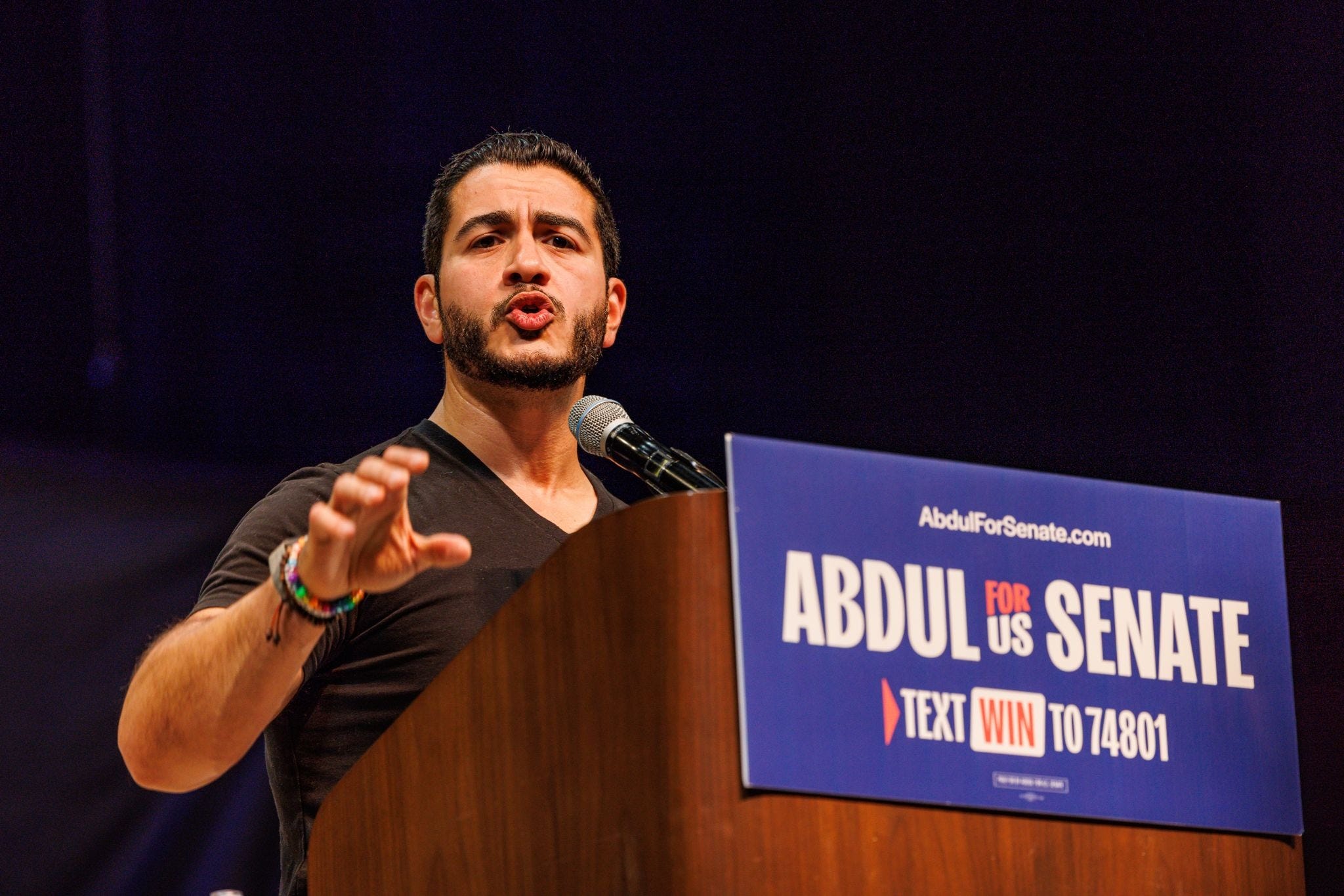
This primary season has been a constant cycle of setting, unraveling, and resetting narratives about which faction is in charge of the party. Before the polls closed last night in Michigan, it seemed like the factional Left was going to make their most definitive statement yet. Then, El-Sayed’s projected near-twenty-point victory ended up being a single percentage point. The Michigan Democratic primary electorate is closely divided; this was not a definitive ideological mandate.
The party and much of the media covering these factional debates are hungry for a definitive statement about who controls the Democratic Party. And this is understandable; it’s been a good long while since there’s been a strong party leader to settle intra-party differences. Give or take ten years, depending on how you count it.
President Obama left as a popular lame duck. His chosen successor, Hillary Clinton, lost a devastating general election. President Biden beat the Left, empowered them to set his domestic policy agenda once he became President, alienated them over his policy towards Israel, and then helped set the conditions for Donald Trump’s return to power.
Each of these events has contributed to today’s state of fracture. The party is rudderless, has been for a long time, and everyone is searching through the electoral tea leaves to gain some clarity about which faction should be in charge.
This is a fool’s errand.
This primary season has revealed some answers, namely a rising anti-establishment sentiment and an electorate that is increasingly wary of special interest groups and corporate influence. But when you look at the actual election results, the factional Left is still quite fractional. Insurgent House primaries in Colorado, New York, and Michigan have gotten a lot of media attention. But there are still many examples like Wesley Bell, who fended off his Left challenger in St. Louis last night. On the Senate side, El-Sayed is the only real example of a factional Left candidate competing in a critical swing-state election.
Dig into the demographics of these elections and the story becomes even more muddied. The Left has run on an agenda that is supposed to appeal to more working-class voters, but in states like New York and Michigan, their base is primarily the educated and well-off.
There just isn’t a neat narrative to describe any of this.
I think we should all get ready to be satisfied with being unsatisfied, and for a good long while too. That’s because the debate over what the Democratic Party is, the policies it prioritizes, and who should lead it is still very much an open question. The Searchlight Institute is working to shape this conversation, and ultimately, a more definitive answer will come when presidential candidates start competing in the 2028 primaries.
Even then, the leader who emerges could be ideologically left on economics, while moving to the center on issues like energy and immigration — two positions where the Democratic Party was once definitively very left-wing.
What do you label a future Democratic Party leader who rejects 2020-era litmus tests over issues like border decriminalization and fracking bans, while also embracing a form of Medicare for All, a wealth tax on billionaires, and a pledge to end all military aid to Israel? Do we have the right vocabulary to describe this possible outcome?
Thus far, I say no. According to most media outlets, the battle over the Democratic Party is still being fought between the Left and Center. I don’t think either ideological label aptly describes the factional war. The candidates running this primary cycle have been quite ideologically heterodox. This applies to candidates across the factional divide.
“Moderates” like James Talarico and Josh Turek regularly bash big corporations and billionaires on the campaign trail. At the same time, the face of the factional Left, Abdul El-Sayed, rarely mentioned climate policy and modified his Medicare for All plan to allow for workers and their families to keep their insurance — a policy change that is a pivot away from Bernie Sanders’ health care plan, which has long been the benchmark on the Left.
I mention these examples not to nitpick the media’s coverage or to completely dismiss simple ideological labels. Each of these candidates can still be generalized into the Left or moderate camp. Strategically, the best move for a candidate like El-Sayed would be to moderate and explicitly court swing voters who have deeply held conservative positions on issues like immigration, crime, and energy policy.
But everybody needs to dampen their expectation that a clear factional victory will happen this November or even the November two years after that. America’s enduring and inescapable ideological diversity will ensure that both sides will need to compromise if any enduring governing majority can form.
I know this fact is uncomfortable for some people to admit. The Left, in particular, built a political project assuming that there was a secret majority of voters that hated billionaires, wanted to fight climate change, and opposed any form of order at the border. This coalition does not exist. By the same token, there isn’t a secret coalition that loves data centers, unfettered support of Israel, and is completely satisfied with the American health care system.
In the grand scheme of American history, this ideological diversity is quite modest. We’ve been far more divided, and we’ve still kept the faith. Walt Whitman, writing in the aftermath of the Civil War, has some words that apply to today’s fractious Democratic Party and the country at large.
“The United States themselves are essentially the greatest poem… Here is not merely a nation but a teeming nation of nations… Here is the life of the Republic.”
There hasn’t been a winner of the factional battle this primary season, but rather an assortment of wins for the factional Left, heterodox outsiders, and yes, even a few bog-standard establishment politicians. Whoever eventually takes control of the Democratic Party and establishes a durable governing majority must unite this “teeming nation of nations.” That’s one of the oldest rules in American politics. And it’s a good one.
How does an avowed non-Democrat (Bernie Sanders) get to speak for the Democratic party without any push-back? His interviews since last night show how he is further positioning an antagonistic non-Democratic party in his own image. At least AOC is a Democrat and DSA has at times disavowed her.
I think the author's concern is not focused on the real weakness in the Democratic party. Why does the author think it is important that Dems have a certain degree of ideological purity? As far as I can tell, there has never been a time in American politics in which either party has exhibited such a thing. In fact, there is no actual need to worry about uniting the various factions in the Democratic party. Are we to believe that because the left, for instance, is either not in control, or has some of its issues left off the platform they will suddenly start supporting the rebubs? This perceived issue misses the real problem. For example, The reason why Clinton lost was not due to extreme elements in the Democratic party. Rather, it was because a sizeable portion of the public by that time really disliked the Clintons and because the Democratic Party sent her on a coronation tour, rather than hold an actual real primary in which Sanders had a chance. The reason why Ms. Harris lost was also not due to perceived extreme elements of the Democratic party, but rather because of Joe Biden's ego and the failure of the Democratic party to tell Biden that he was too old. Many voters simply resented having Ms. Harris (a highly capable candidate) forced on them. The reason why some voters think the Democratic party is too far to the left on some issues is because it has allowed the rebubs to make hay on wedge issues, such as defund the police, border enforcement, and trans girls in sports; when it should simply disavow such issues. All of these things point to failures in leadership in the Democratic party, not the party's diversity in ideas.