

Many years ago, my old boss Matt Yglesias coined the term “Pundit’s Fallacy” to describe how columnists always tell politicians to adopt their preferred policies if they want to appeal to more voters.
This fallacy can easily be extended to politicians themselves when they critique their political party. Of course Democrats would win back working-class voters, if only they all sounded exactly like me.
Democrats of all stripes do this. Earlier this year, Senators Chris Murphy and Elizabeth Warren told their colleagues that affordability alone would not win back swing voters; the message must also “confront the billionaires and corporations making it impossible for hardworking Americans to achieve and afford a middle-class life.”
Is this a politician’s fallacy or good messaging advice?
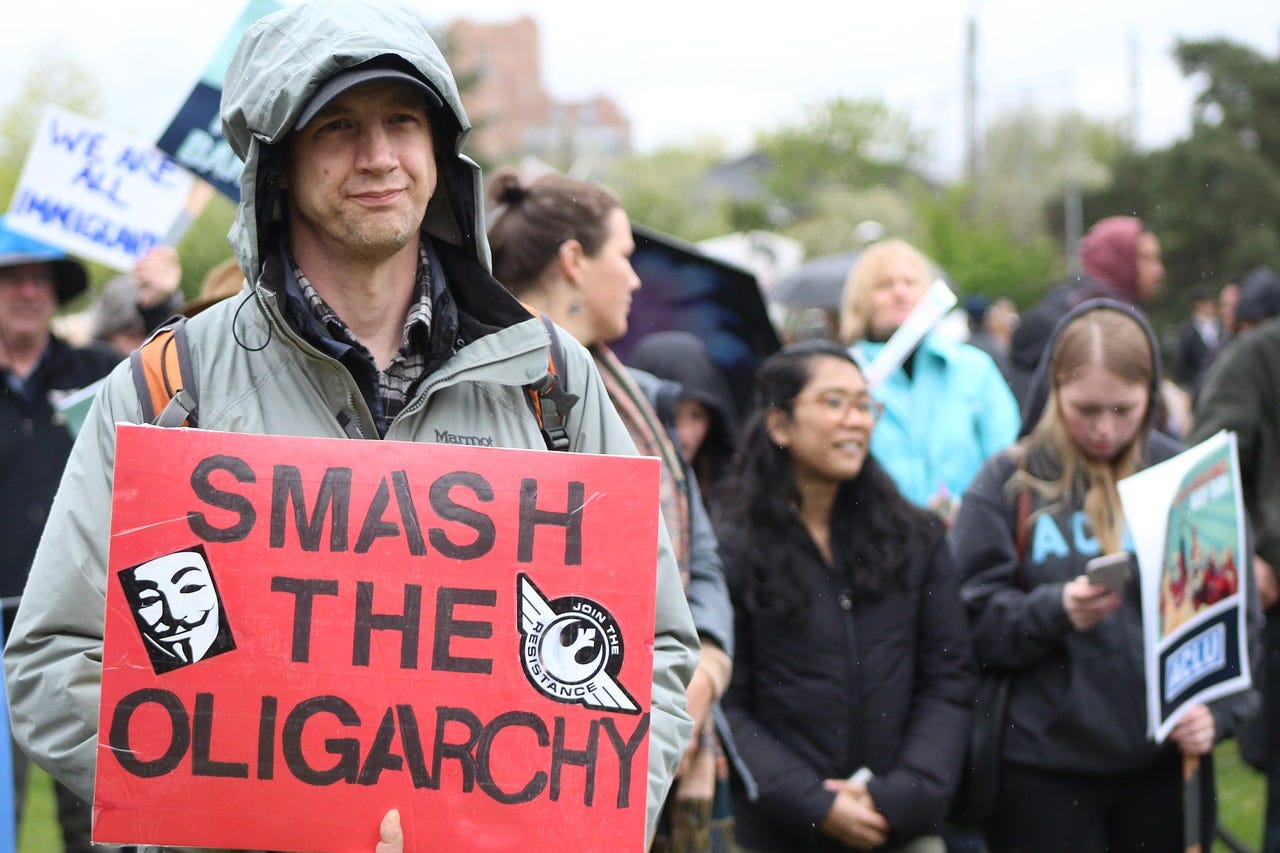
Kitchen Table Messaging for the Populist Era, a new report from the Rural Urban Bridge Initiative and the Center for Working-Class Politics, helps answer this question. They tested a variety of economic populist messages on 6,000 voters, with an oversampling of 1,100 rural Americans. If the goal is to win persuadable Trump voters, they find that an economic populist message that rails against the oligarchy is not particularly persuasive. It’s not the worst message — that would be the one that frames economic policies around race — but it performed worse than less confrontational messages.
Jarod Abbott, the author of the report, explained to me why: “There’s different streams of working class people that bump up against the overly aggressive anti-corporate, anti-billionaire measures for different reasons. There’s some of them that aspire to be a millionaire. To be successful. They want companies to be able to thrive. And it sounds like you’re saying you don’t want that.”
I think this might surprise many staffers working in progressive politics. But what sounds good to a cosmopolitan pundit, staffer, or blue-state politician might not always be in line with what a persuadable red-leaning voter wants to hear. That doesn’t mean these voters don’t want to tax the billionaires or feel ripped off by corporations— many of them do. It’s just that they aren’t convinced that taking on the oligarchy will make their lives better.
The right economic populism is…
Before we get into the sort of message that appeals to swing voters the most, it’s important to acknowledge there’s no magical phrase that will sell a voter on a position that they fundamentally disagree with. If they like natural gas and want their electricity bills lowered (as many voters do), there’s nothing a politician can do to make them support a fracking ban.
So while I take many messaging test projects with a grain of salt, I found this project to be convincing. That’s because embedded inside each economic message is an actual issue. Of course, all voters want politicians to make their lives more affordable, but is the best way to do that by passing policies that lower costs and make corporations pay their fair share? Are they convinced lowering costs must confront the oligarchy or fascists? Or, do Republicans really have it right and voters want to scapegoat immigrants?
The Kitchen Table Messaging project tested the relative effectiveness of these issues. Each respondent first saw a Republican opposition message, randomly assigned to focus on either government corruption/waste or immigration. They were then given three Democratic economic-populist messages, drawn at random from a pool of thirteen, and asked to rate their relative effectiveness. The messages were adapted from real-life examples, including politicians’ speeches and guidance from political consulting firms.
The best-testing message is the one they describe as “American Way.”
Most people just want to work hard, get ahead, and give their kids a better shot - and they should be able to. But the cost of rent, groceries, and health care keeps going up faster than working families can keep up, and paychecks just aren’t stretching the way they used to. I’m going to bring those costs down for working people, make sure the biggest corporations pay their fair share, and crack down on corruption and the people who game the system for themselves. Hard work should pay off again - that’s the American way.
The idea that hard work should pay off gets at a core American value of fairness and reciprocity. It’s reminiscent of Bill Clinton’s pledge in his 1992 campaign that “if you work hard and play by the rules,” you’ll be rewarded. But it also acknowledges that there are people who do “game the system,” and this includes corporations.
The study also tested a variant on the American Way with a much more confrontational focus. The core reciprocity theme was still there, but it more explicitly identified the wealthy and corporations for rigging the system. The message performed slightly better with Democrats, but it dropped 25, 16, and 20 points among Republicans, small-town residents, and 2026 undecideds, respectively.
It’s worth noting that many of the messages tested were positive because they addressed the widely shared grievance of the economy being unaffordable, but it’s notable that this more confrontational version did worse with the exact sort of voter groups Democrats need to win if they want to build a durable governing majority.
Performing even worse is a “Fighting Oligarchy” message that was adapted from politicians like Abdul El-Sayed, Graham Platner, and Alexandria Ocasio-Cortez. This message calls out “a handful of billionaires and would-be oligarchs who are restructuring our government to serve one agenda.” The message ends with “People over oligarchy. It’s time to take it back.”
Abbott told me he thinks this message didn’t resonate with persuadable voters because, “A lot of that wording just reads as like activisty, it just doesn’t sound normal to a lot of working-class people.”
This November, we will get a lot more real-world examples of these different flavors of economic populism. For example, Michigan will be voting both for Abdul El-Sayed in the Senate race and Jocelyn Benson for governor. Whereas El-Sayed uses oligarchy rhetoric, Benson is much less confrontational: “We’re all committed to driving down costs, to ensure healthcare is accessible to all, to ending corruption, to growing our economy and increasing our wages.”
According to this experiment, Benson should perform better, and the current polls generally predict this exact outcome. It’s also worth remembering that Graham Platner, before he dropped out of the race, was performing poorly with working-class voters despite using hyper-aggressive oligarchy rhetoric.
Race-class-narrative performed worst
The worst-performing messages were the ones that were once very common inside the Democratic Party: race-class narrative. This political communications strategy was designed by progressive political consultants to combat right-wing dog-whistles by fusing together racial justice and class narratives.
They tested verbatim messages from ASO Communications, a race-class narrative political consulting firm. Comparatively, all race-class narrative messages performed the worst in the study, but the one with an added racial treatment performed the worst:1 “And if billionaires and Republicans can talk you into thinking Black people and new immigrants are to blame for your hard times, they will keep getting away with it.”
Compared to “American Way”, it performed 42 points worse with all voters, and it was most underwater with Republicans, persuadable Trump voters, and those who were undecided in the 2026 presidential election.
This messaging is not used by as many progressive politicians today. But in 2020, it was an integral part of the Democratic Party’s strategy and was deployed in canvassing programs in Michigan, North Carolina, and Pennsylvania. Prominent politicians, including President Biden, could be heard using race-class narrative appeals in their speeches.
At the time, many strategists with experience operating in red states warned that messaging every economic policy with a racial framing would reduce its universal appeal. Micah English and Josh Kalla, two political science professors, caused what was, at the time, a major controversy when they published research showing that centering race undermined support for policies like Medicare for All, building more affordable housing, and decriminalizing marijuana.
But if you listen to the messages used by politicians successfully running in swing districts, it’s clear that race-neutral economic populism is the much more effective way to appeal to swing voters. Ultimately, winning those races is the only way to build the sort of legislative coalition that can pass and implement the sort of progressive economic policies that will reduce racial inequality.
The best economic populists
In my interview with Abbott, I was curious who he thought were the most effective economic populists this election cycle.
He mentioned Rebecca Cooke in Wisconsin, Bob Brooks in Pennsylvania, and Brian Poindexter in Ohio. Each of these congressional candidates are running against Republican incumbents, and their path to victory will involve turning out both the Democratic base and winning persuadable Trump voters.
According to research from Navigator, one out of five Trump voters now profess to regret their vote. That means there’s a real path here for these candidates to beat Republicans. But according to another poll from Politico, only 37% of voters say Democrats best represent the interests of the working class, a seven point advantage over Republicans.
The fact that Democrats still only have a seven point advantage on this question, despite the fact that Republicans cut SNAP benefits, reduced Medicaid eligibility, and increased prices on imported goods, just shows how much work the party has to do.
There’s an opportunity here to become the party of affordability, but that message needs to broadly appealable to swing voters. Brian Poindexter, the union economic populist from suburban Ohio, is embracing the American Way message.
“A rising grocery bill or healthcare premium hits a working family a lot harder than it hits a CEO or a politician insulated from those costs. My focus is simple: if you work hard, you should be able to afford to live with dignity, support your family, and plan for the future. That’s not asking for special treatment — it’s asking for a fair deal.”
We’ll see how this message actually fares this November. But when the midterms conclude, and the presidential cycle begins in earnest, expect the politician’s fallacy to begin in earnest.
We can take back the White House and build a durable governing majority, if only you start sounding more like me.
The only way to know if they’re right is to look at the politicians who perform best with persuadable Trump voters. That economic populist message should define the Democratic Party.
An earlier version of this piece incorrectly stated that the most race focused message was verbatim from ASO communications.
As Bob Dylan wrote, "you don't need a weatherman to know which way the wind blows" (and yes, there is a lot of applicable subtext to how that phrase was used then, and how it may well be adopted to our current situation). In other words, the villagers have started thinking about gathering their pitchforks and torches. They don't need complex polling that attempts to suss out the perfect communication tool. They know the monster isn't capitalism—it's the abuse of capitalism. And the the abusers are the oligarchs who use their vast wealth to exert power over them. The oligarchs who own the media and control how reality is manipulated, who have monopolized corporations and control what goods are offered and at what price, who harvest their personal data and monetize it, who control which candidates are offered up and how they stand on issues, who decide how much of their health care will be covered, where data centers are built, which wars are fought, etc., etc., etc. The villagers know the monster is oligarchy. They know that what is happening in Russia is beginning to happen in America. The urgency is palpable. The villagers only need a clear, unambiguous unifying message concerning where the monster lives.
"Economic populism" - if that's the goal - should probably start with how to address the needs of the largest population of voters. Most of the population is in a household with income that exceeds thresholds for SNAP or Medicaid, so their path to affordability is much less driven by government programs and much more driven by taxes and interest rates. That segment of voters (who don't qualify for government programs) likely won't benefit from increasing tax rates on the rich.
In addition, many programs ascribed to economic populism depend on "ifs" before realizing outcomes: getting trained on green energy like windmills makes sense if you can move to very rural areas, free bus fares make sense if you can afford living in HCOL metro areas, free college education makes sense if companies recruit in your major from your school after you've spent years on a college education.
That's not to say that all programs are ineffective from the get go. Rather, selling a program requires belief in government execution from voters. That is a very tough sell to voters who don't believe the government can execute on the programs it already runs.