

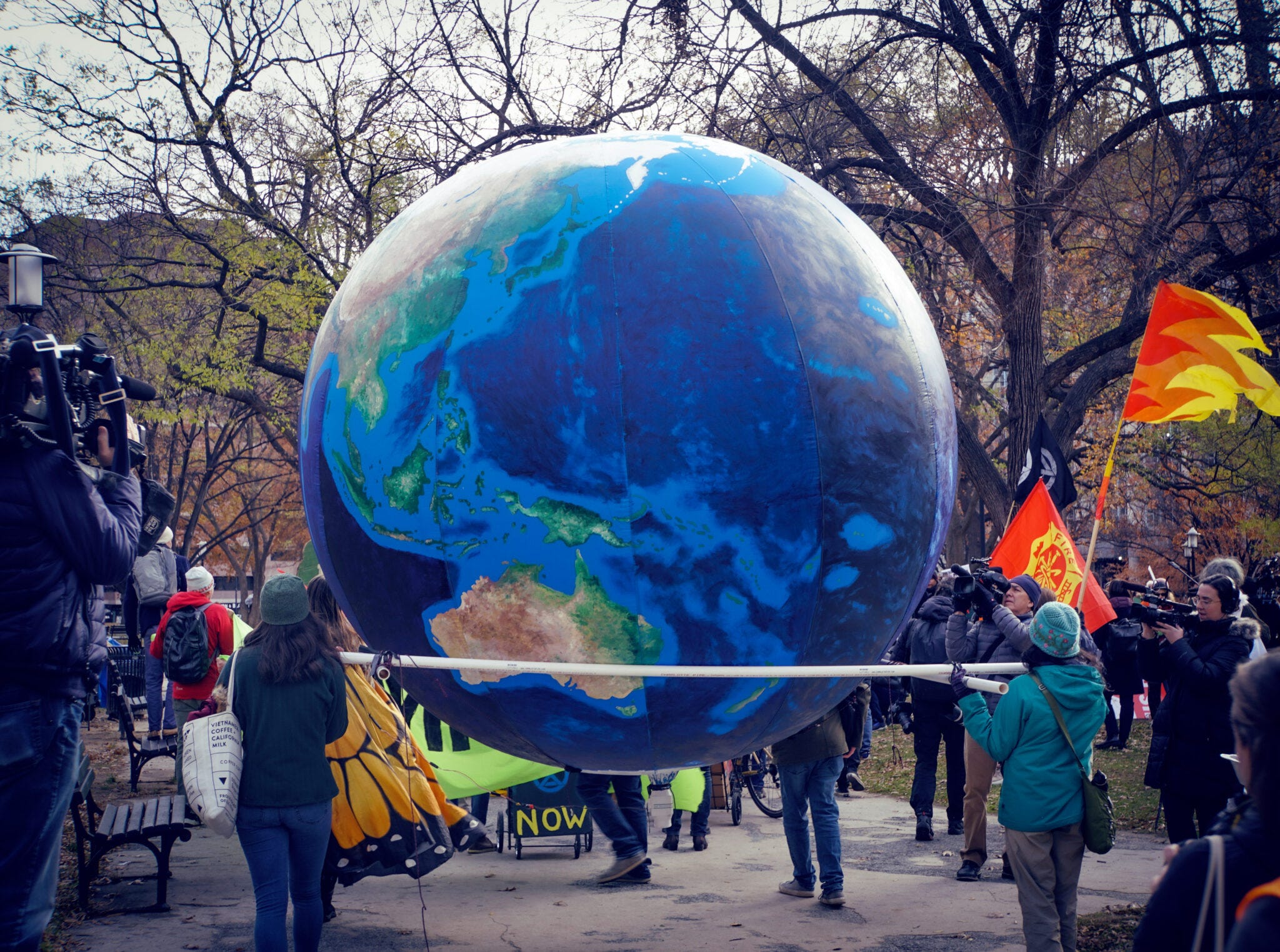
One of Searchlight’s most important research findings is that voters are usually ideologically inconsistent: This usually means they lean liberal on economic issues and conservative on the cultural ones. But sometimes, voters will also display inconsistent opinions on the same issue, which can confuse advocacy groups and politicians alike.
This sort of conflicted thinking is especially common in discussions about the environment. In the abstract, most voters say they care deeply about environmental issues; they want clean air and water to be a top policymaking priority, and they express low levels of support for polluting industries. If you just looked at Americans’ abstract views on the environment, you might think that protecting the environment is high salience, bipartisan, and unifying.
But it’s not. That’s because voters have more nuanced opinions on this topic than many advocacy organizations publicly admit. When it comes to protecting the environment or fighting climate change, it’s easy to get a simple affirmative answer, but to really understand public opinion, you have to ask about concrete policies and trade-offs. As someone who wants the government to enforce stricter regulations on oil and gas companies and advance policies that will decarbonize our economy, I want more like-minded organizations and polling professionals to be clear-eyed about public opinion.
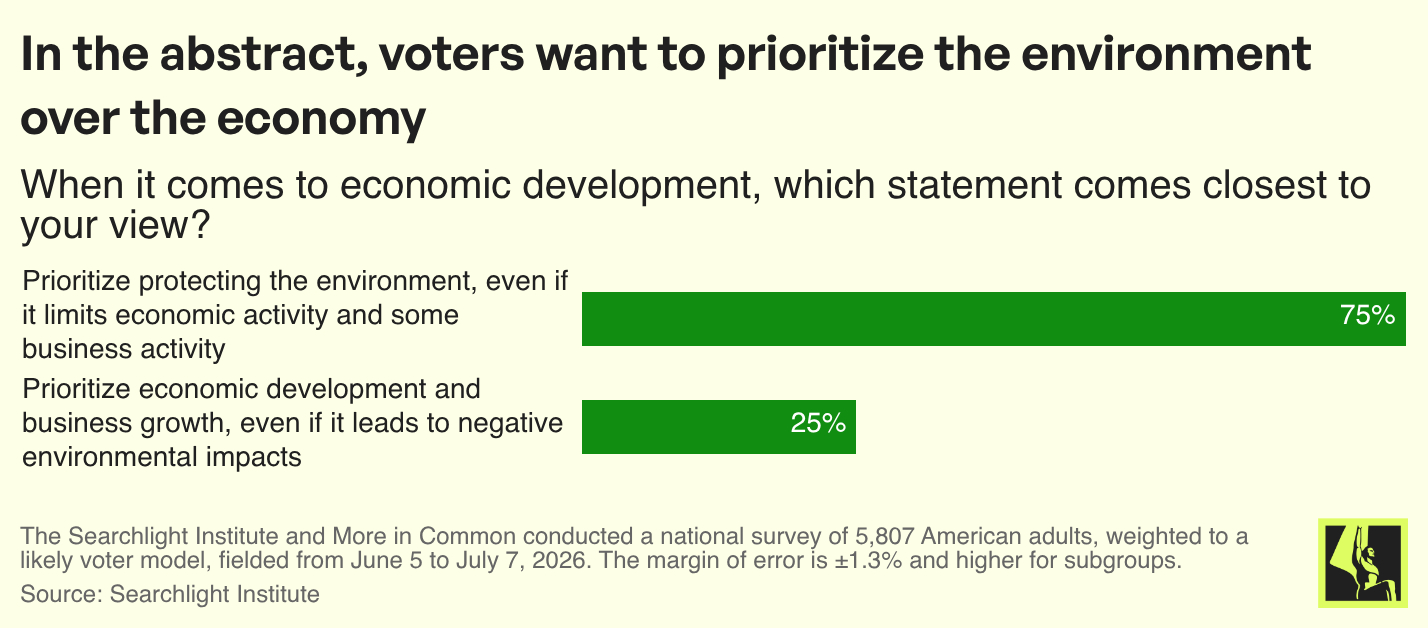
In polling from our recent project, How to Build a Supermajority, we asked voters a simple question: Do you want the government to prioritize protecting the environment or economic development? The environment beat the economy by over 50 points.
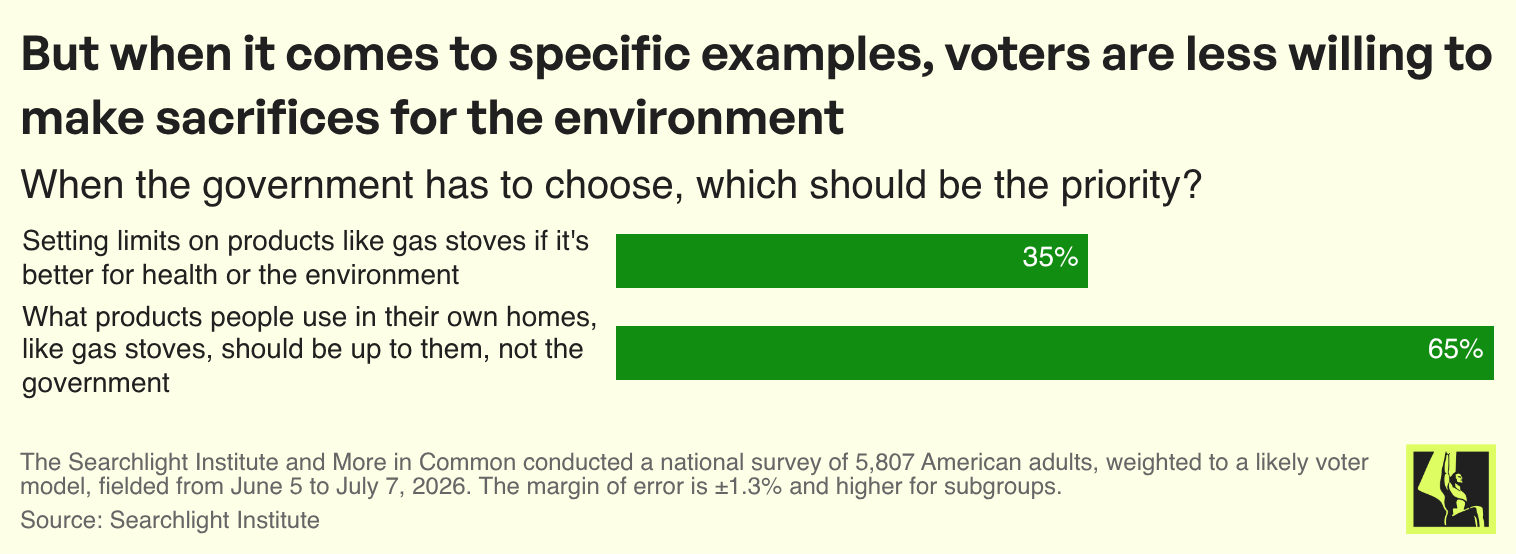
But then we asked those same voters a follow-up question: Would they be willing to accept a limitation on consumer choice in order to protect the environment?
The answer was unequivocally no.
In fact, when we compared the respondents, we found that over half of the voters who said the government should prioritize the environment also said that the government should not set limits on products with negative environmental effects.
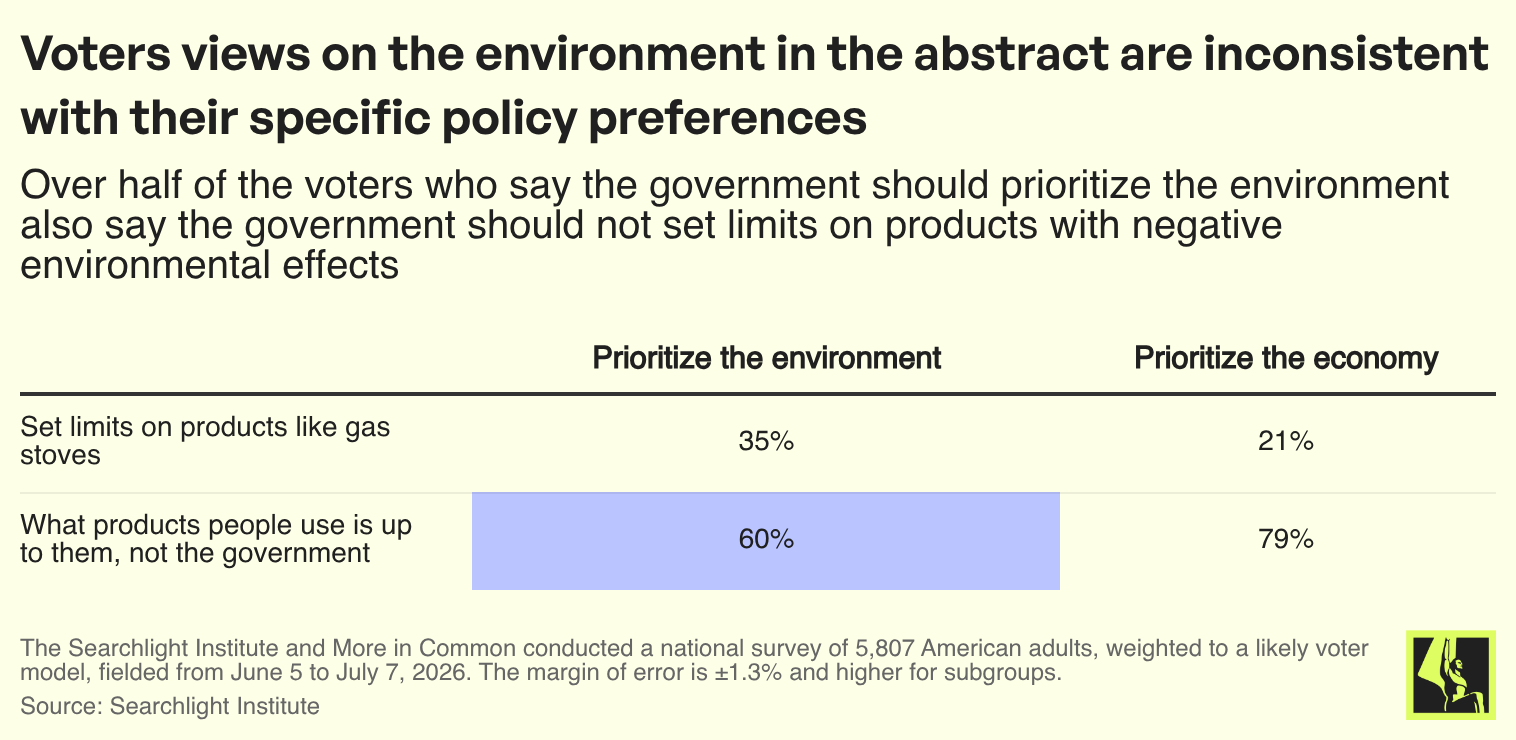
The upshot of this isn’t to dismiss the importance of environmental regulations; many of the policy goals the environmental movement fought for over the last 50 years have been critical to cleaning our air and water, and improving public health. But it’s something for policymakers to keep in mind when they think about the political backlash that might result from fighting for certain environmental policies.
This tension is a live debate inside the Democratic Party. In the lead-up to the 2024 presidential election, the Biden administration issued a regulation that would effectively phase out the vast majority of combustion-engine vehicles by the year 2032, accelerating the transition to electric cars. The environmental and public health benefits here are obvious, but this rule also served as a de facto restriction on consumer choice. A survey from Pew Research a year before showed that six-in-ten Americans did not support a gasoline vehicle phase-out, which is roughly in line with our research on gas stoves.
The Biden administration pursued similar policies limiting the amount of water that can flow from new showerheads, dishwashers, and other household appliances. While these were not top voting issues at the ballot box, Trump did occasionally mention them in his campaign rallies. Some pundits like to make fun of Trump’s obsession with showerhead flow, but as our polling shows, it taps into a real sentiment voters have about being told what they can and can’t buy.
Public opinion on climate change functions very similarly.
The climate movement argues that Americans are concerned about climate change. Consequently, the argument goes, politicians should prioritize this issue in their political messaging and policymaking. But similar to the environment, it’s easy for people to express concern in the abstract. If you want a more realistic understanding of the politics of the issue, you need to understand its relative salience and ask voters what they are willing to sacrifice.
In this case, voters regularly rank climate as one of the least important issues in the country, and polls repeatedly find that voters are not willing to incur any real cost to fight climate change. An AP survey found that 57% of Americans would pay $1 a month to fight climate change, but when that amount was increased to $10, support dropped to 28%. Searchlight polling from last month shows that the majority of voters would prefer to keep energy costs low rather than fight climate change; only 33% supported climate over low energy costs. Many policymakers and advocates know this, which is why carbon taxes never pass, and why the Inflation Reduction Act was messaged as an economically beneficial piece of climate legislation.
Again, this should not be read as an argument for not passing policies that protect the environment and reduce carbon emissions. But with inflation and cost-of-living dominating voter concerns, policymakers need to be clear-eyed about the limits of simple polls and the complexity of voter opinion.
Ultimately, it comes down to how policymakers should spend their political capital. It’s worth passing policies that will fight climate change, but we should prioritize the ones that are durable and impactful. The bipartisan permitting bill that is currently being debated in the Senate is an example of this; it will dramatically increase the speed at which we build clean energy and lead to net emissions reductions in the long term. In contrast, unpopular rules and regulations that are subject to being overturned by the next administration should be approached with more caution.
Political capital is finite, and it must be spent wisely. The alternative is losing elections and empowering the politicians who will reduce regulations on the fossil fuel industry and undermine the fight against climate change.
"As someone who wants the government to enforce stricter regulations on oil and gas companies and advance policies that will decarbonize our economy, "
Those are not objectives. _Objectives_ are how much you value your consumption vs that of peoppe far away from you in time and space. Environmental policies involve some sacrifice of consumption (the cost of adjusting to a different set of relative prices) so that others will not have to ajust as much as they other wise would, w/o the policy.