

What motivates someone in the voting booth?
As a political data analyst, this question haunts me every election season. Most of the answer is pretty easy: That voter is either a Democrat or a Republican. But when it comes down to what persuades the critical percentage of voters who swing from Obama to Trump to Biden to Trump, it’s hard to isolate a specific factor.
That doesn’t mean we can’t draw strong conclusions about the salient issues that motivate these voters. For example, we know from numerous high-quality polls and surveys that many Americans were upset about immigration and inflation in the 2024 election, and conversely, don’t particularly prioritize issues like climate change or gun control. The point is that it’s hard to make sweeping generalizations about what makes a specific voter decide to switch to a different candidate or just stay home. As much as it might disappoint online political takesters and media pundits, my profession is best when it operates with caution and qualifications. The best estimates of the impact of political interventions such as ads, canvassing, etc. are small and complicated by exogenous factors.
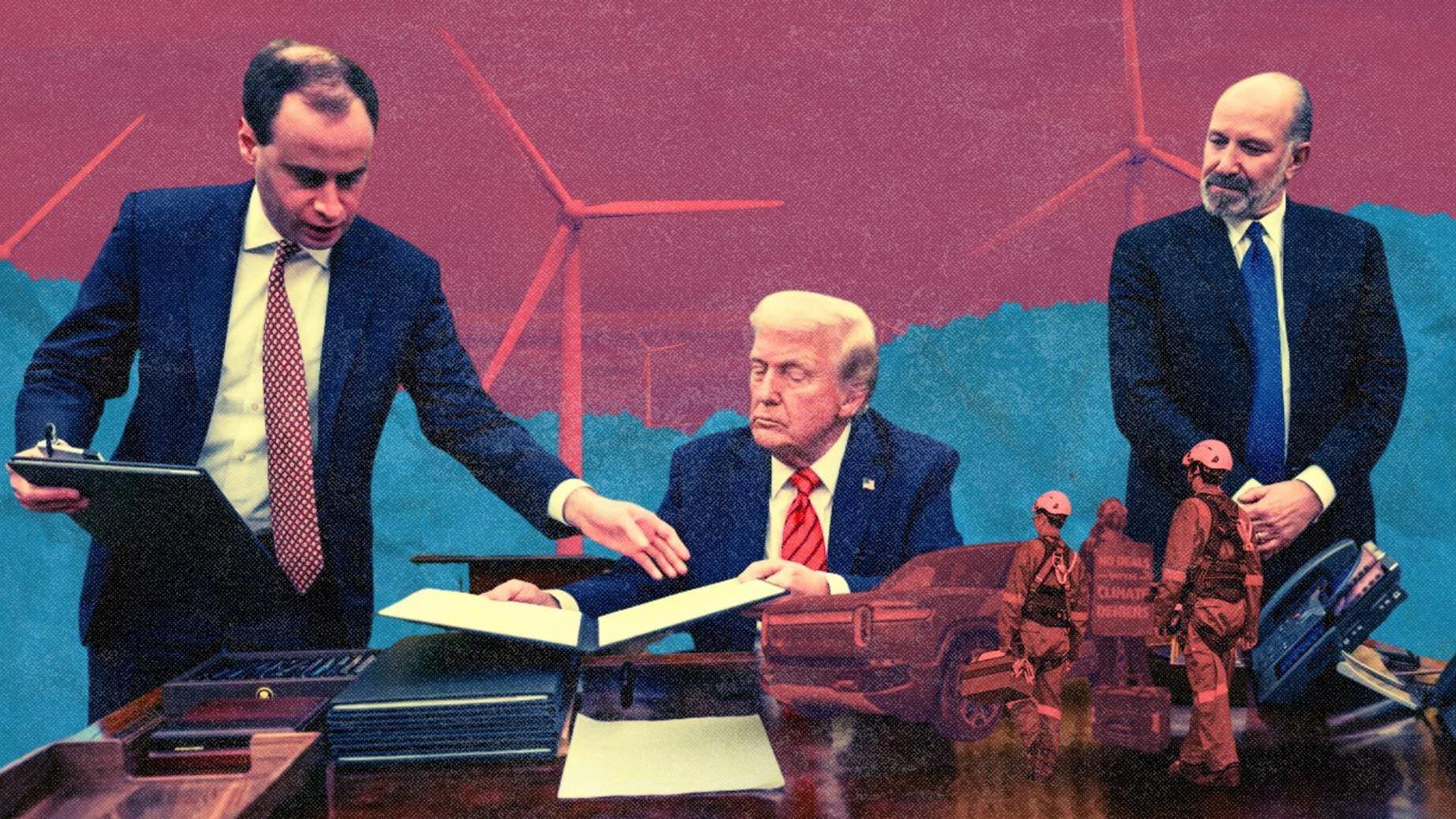
That’s why I was surprised to see Leah Stokes, a well-known political scientist and climate advocate, claim that Biden’s Inflation Reduction Act gave Democrats 2.5 million votes in the 2024 presidential election, an implausibly large number.1


This claim is based on a recent paper Stokes co-authored, which attempted to estimate how the IRA’s clean energy build-out impacted Democratic voter shares in the communities where the projects were built.
I did not fully agree with the methodology of the paper or many of its conclusions, but I appreciated that it did not make the sort of sweeping claim that Stokes is now claiming on social media. Regarding the 2.5 million vote total, it says “This is an accounting benchmark rather than a counterfactual election result: the implied votes accrue in treated districts across safe and competitive states alike, and presidential outcomes run through the Electoral College.”
Put simply, this is just back-of-envelope multiplication. It’s not a rigorous counterfactual election result.
I understand the need to make your academic research as interesting and occasionally click-baity as possible (everyone wants a big impactful number), but I think this is a pretty misleading way to present your work.
Climate change is a really big deal. It’s important that Democrats use their next congressional majority to pull more policy levers that make it easier to decarbonize our economy and develop new technologies that will decarbonize the rest of the world too. But research like this will not help Democrats win that congressional majority. It’s a form of elite misinformation, and it exists to just misinform people who are already inclined to agree we need more sweeping climate action. But to get that legislative change, we don’t need to convince those people. We need to build a supermajority coalition that runs through states where oil and gas is very popular. Stokes’ paper, and especially her public presentation of it, does not advance that goal.
How did Leah Stokes get this shocking result?
The paper, which Stokes co-authored with Denis Lomov, analyzed 234 House districts that saw 523 clean-energy factories announced during the Biden administration. They then compared the electoral results to districts that had similar socioeconomic and voting breakdowns, but did not see factory construction. Because there are only so many congressional districts and it’s hard to find an exact match, they statistically reweighted the non-factory districts based on traits like education, income, and race to match the districts with factories.
The result is that IRA-impacted districts saw a 1.5-percentage-point increase in Democratic vote share compared to similar districts that didn’t get a factory. They then took that 1.5-point number and multiplied it by the total number of votes cast across those 234 districts, which produced an estimate of roughly 2.5 million votes.
It’s important to note that there were several similar electoral analyses done at the county level of the 2024 election, and they all found marginal effects. A report from the Center for American Progress looked at the electoral impact of all of Biden’s industrial policy and found that “Each additional IIJA, CHIPS, or IRA project in a county is associated with an increase in Harris’ vote share of 0.028 percentage points in that county and a decrease in Trump’s vote share of 0.026 percentage points.” Keep in mind that this included the jobs from every industrial project under the Biden administration, not just clean energy ones. Stokes and Lomov’s paper uses a larger unit of analysis (congressional district rather than county), giving them fewer data points to work with, which may account for the differences here.
In any case, Stokes and Lomov’s paper is out of step with the existing literature.
Also, none of these other reports attempted to find a raw total vote count by multiplying that vote share across the country. That’s because this is not a careful research method. The 1.5% increase in vote share is not a fixed number; it’s something with a wide confidence interval. So when you multiply it by tens of millions of votes, the corresponding number has an even wider confidence interval. The paper itself presents that number appropriately, as a rough benchmark, not a real prediction.
Again, if you get a result that is not in line with the previous research, the important thing to do is present your findings with caution. The authors did the exact opposite; they took a moderately careful paper, turned it into a less careful article, and then claimed on social media that the IRA gave Democrats 2.5 million votes.
An honest look at the IRA’s political impact
Just from a smell test, it’s really hard to imagine 2.5 million Americans waking up in 2024 and deciding to vote for Kamala Harris solely because a new battery plant or utility-scale solar farm opened up in their congressional district.
Now, the counterargument from Stokes and Lomov would be that they didn’t vote directly because of that solar farm; it was because of the downstream economic effects in the district. But still, that means 2.5 million Americans shifted their vote to Democrats solely because of better economic conditions. Remember the point I began this piece with: It is really hard to isolate a single confounding variable in an election. Different congressional districts see different amounts of political advertising, have different rates of crime and immigration, and have external factors that change the economic growth in their district. Saying that the IRA alone changed 2.5 million minds is a claim that just really strains credulity.
But let’s try to take it at face value. The paper estimates that 191,412 jobs were created across 234 districts. That means each job directly led to 13 votes. That’s a big effect, and it’s contrary to other literature that attempts to measure the relationship between green jobs and increased political support. In addition to the study from the Center for American Progress, there have been three more studies that found a minimal or a negligible increase in political support in communities that saw green industrial investments. I can’t find a precedent for any industrial policy leading to an increase in vote share that is close to what this paper is estimating.
Then consider the fact that, according to the paper’s own findings, only 33% of these facilities were active by the 2024 election. That means in terms of actual jobs created at the time of voting, each job resulted in 40 votes. Could the creation of one job really lead to 40 people deciding to vote for Kamala Harris? That is the claim the paper is trying to make.
It’s also worth noting that the primary issue in the 2024 election was the cost of living. The unemployment rate was running close to what economists consider to be “full employment.” And voters did not list availability of jobs as a voting concern on any post-election survey. While increased employment was an important political message in selling the New Deal jobs programs or after the 2008 Financial Crisis, it just wasn’t a salient issue in the 2024 election.
Now, I understand that part of the idea is that the direct job creation did not shift votes; rather, it was the change in the district’s economic conditions that might be triggered by increased investment. But remember that the IRA was passed two years before the 2024 election, and of the 33% of facilities operating, many had only recently opened. Is the economic impact of a newly opened factory really so substantial that it directly persuaded 2.5 million voters to vote for Kamala Harris?
This would also require voters to be aware that the IRA, and specifically, Democrats were responsible for this new factory. And there’s little evidence that voters even knew about Biden’s industrial climate policy. According to a survey from Yale University’s Program on Climate Change Communication, four in ten voters never heard of the law and only 11% heard “a lot” about it. In a Morning Consult poll that came out the week before the 2024 election, only 24% of voters said the IRA affected them positively.
There was an extensive push from the White House and Green Groups to sell the IRA, but it never materially impacted a majority of the public. Why? Earlier this year, Heatmap interviewed 55 experts who were involved with implementing the new law. And one of the most common takeaways was that the IRA “was too slow and not visible enough.” One clean energy analyst summed up the problem, “The IRA was too abstract for people.”
Again, I’m an election analyst, not a social science professor. So I’m not here to debunk the methods or statistically disprove Stokes and Lomov’s result. But with everything we know about what motivates voters, and the limited electoral effects of industrial policy, I do not think that 2.5 million vote estimate is credible at all.
Do we need to do climate politics?
Stokes and Lomov’s paper comes at a time when climate is losing the sort of prevalence it once had in our electoral politics. It was one of the least salient issues in the 2024 presidential election. And it is again one of the least salient issues during this midterm cycle.
This leaves many climate activists wondering: Is it even possible to do climate politics? Searchlight’s take is that it’s generally not a good idea for politicians to use their limited time persuading swing voters to focus on an issue with limited electoral salience, but that doesn’t mean you shouldn’t do climate policy when you have the power to.
But this paper is being used by climate activists to argue for framing climate policy in economic terms: Green jobs increase support for Democrats. But again, this is a really contentious claim to make, and a stretch to extrapolate to campaign messaging. Voter concerns like affordability, health care, and immigration are just far more salient to the voters Democrats need to win if they want to build a durable governing coalition. There’s no reason why climate needs to be included.
Now, that doesn’t necessarily mean advocates can’t target politicians who don’t support green policies.
A new PAC called Invest in Tomorrow Coalition has emerged this election cycle. They’re backed by various big players in the renewable energy committee, and they are targeting Republicans in primaries who have been uniquely hostile to the clean energy industry. Interestingly, they are not actually mentioning climate or the IRA in their messaging.
According to Politico, in a recent ad campaign against Tennessee Congressman Andy Ogles, “The group’s ads did not mention clean energy, instead targeting conservative voters with advertisements that boosted Hatcher’s right-wing credentials and chided Ogles for missing votes.”
Charlie Hatcher definitely does not fit the profile of a climate champion, but he is comparatively much more favorable to renewables. In a deep red congressional district, this is just pragmatic green politics. And the omission of clean energy from a PAC of clean energy enthusiasts is a recognition that their issue is not going to persuade swing voters who are skeptical of Democrats.
I’m not asking the climate activist community to start exclusively supporting Republicans in primaries who are comparatively more favorable to renewables. But I do think they need to start being more honest and rigorous when it comes to the electoral impact of their issue. That’s the only way we’ll ever be able to build the sort of governing coalition we need to decarbonize our economy.
For scale, this estimate assumes a 1.5 percentage point increase in Democratic vote share in relevant districts. Recent estimates of the effects of the Great Recession put the impact of a one-point local unemployment shock at between 0.6 and 2 percentage points. 2.5 million is an enormous number of votes.
Yes, climate change has been moved to the back burner due to the daily stress imposed on the populace by the train wreck that is trump 2.0. Perhaps the best way forward on climate change is indeed a sideways strategy, in which the more immediate benefits of green energy are highlighted, in lieu of more distance concerns like rising seal level, heat waves, desertification, species migration, inevitable dystopian existence, etc. One has only to look at the benefits already being realized by the rest of the world to see every day examples. Like many problems we face these days, the opposition is mostly organized and directed by the oligarch class, and so climate change could be folded into a broader strategy for the average person to reclaim their power - call it a new populism.
“And the omission of clean energy from a PAC of clean energy enthusiasts is a recognition that their issue is not going to persuade swing voters who are skeptical of Democrats.” How does the omission of an issue in messaging targeted directly and specifically at Republican primary voters have literally anything to say about swing voters? I read this piece with an open mind, as I’ve had some questions about this study’s claims. But it feels quite in keeping with Searchlight’s whole deal to criticize someone for making moderately substantiated claims with a piece that makes a ton of poorly substantiated claims.