


Profiles in Heterodoxy is a column from our team at Searchlight that highlights candidates who make clear choices to appeal to voters who, otherwise, might not vote for a Democrat.
Importantly, we’re interested in figures from all across the Big Tent — moderate, establishment, or Left. The only criterion is whether that candidate is attempting to match the heterodox set of opinions that define the sort of voters who swing elections.
Today’s profile is Jon Ossoff in Georgia.
Growing up in rural Georgia, you get used to a certain pattern: church on Sunday, Bible study on Wednesday, football game on Friday, and, for as long as I can recall, Republicans being in charge of just about everything. This meant that by and large, the odds were that your neighbors were Republicans. Your coworkers were Republicans. The teachers teaching your kids were Republicans. The coaches coaching little league were Republicans. The culture was just Republican.
Since 2016, Georgia’s politics have swiftly evolved. The Republican stronghold has given way to a perennial swing state that flirts with Democrats on the federal level, but Republicans still outnumber Democrats and retain a vise grip on most statewide offices. The only way for Democrats to prevail is to run up the score in the metro areas and the surrounding suburbs, while losing less in the vast rural areas around the state—in other words, they have to build an ideologically diverse coalition.
That’s why this internet ad from Jon Ossoff’s campaign struck me. In it, Richard, a big-rig-driving three-time Trump voter, endorses Ossoff because he wants someone in office “who will stand up for us.” It’s a pretty simple message, but I think it’s particularly effective because it embodies a foundational, and often forgotten, principle in American politics: persuading voters who often vote for the other side is the only way to expand your electoral coalition. There’s no secret coalition of ultra-ideological voters just waiting for the right candidate; persuasion is the key.

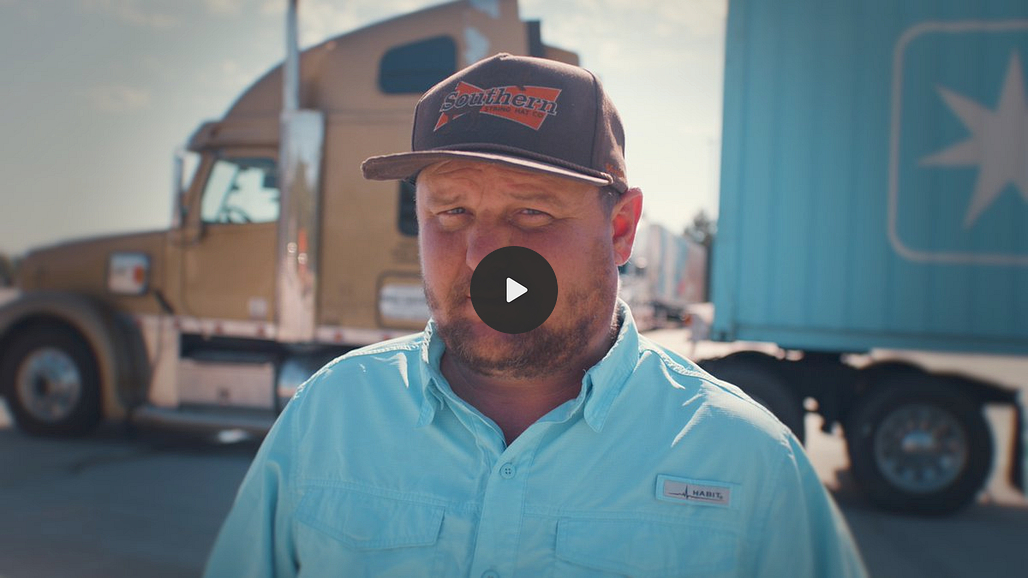
I’m guessing Richard isn’t showing up on any Democratic coordinated campaign’s turnout list. But the Ossoff campaign is right to highlight him because there are probably hundreds of thousands of ‘Richards’ in Georgia who are up for grabs right now. I went to high school with some of them. They aren’t hardcore partisans. They just grew up Republican and have conservative views on many issues, but ultimately just don’t care much about politics and really just want someone to keep gas prices low.
When you have a mindset that treats most, if not all, voters as potentially gettable, it shifts how you engage during campaign season and how you govern once in office. Jon Ossoff seems to understand this better than most folks in the big leagues right now. And I suspect some of it can also be traced to growing up in Georgia at a similar time, when Republicans were cementing their control of the state just about everywhere.
I worry that my fellow liberals who work and comment on politics miss this. While Ossoff gets a lot of attention in the media for his unsparing attacks against Trump and MAGA-aligned Republicans, what often gets overlooked is the simple fact that he has adopted a set of concrete issues that resonate with moderate voters in his state.
He wouldn’t be stoking presidential buzz if he only produced viral clips about Trump family corruption. His case is strong because he’s currently running 8 points ahead of his opponent in a state Trump carried just a few years ago.
For instance, in his recent debate against Mike Collins, Ossoff went viral (at least on my section of the internet) for saying, “If John Lewis were marching today from Selma to Montgomery, Mike Collins would be grabbing a billy club.” But what went ignored in the cheerleading of this answer was Ossoff also endorsing voter ID—a position that is nearly universal among Republican voters in his state.
This political strategy dates back to before Ossoff won his first race. Back in 2017, he very nearly flipped a ruby-red district blue because he prioritized issues that were outside of the party orthodoxy—speaking out on things like fiscal responsibility and combating government waste. While he took some flak for not identifying as a progressive, three years later, he took that strategy statewide for his Senate campaign, and it paid off.
Now running for reelection, Ossoff is poised to win convincingly.
He boasts the endorsements of Republican leaders both in Georgia and beyond. And he pairs this coalition building with real breaks from Democratic Party orthodoxy, not just on voter ID, but also through his support for the tough-on-immigration Laken Riley Act. In short, he’s acting like a leader who understands the constituency he represents and is specifically creating a permission structure for those who are used to culturally supporting Republicans to vote for him.
Democrats are poised to do well in the midterms, but they should not misread that potential success as a panacea for the problems they face. The party is still broadly perceived as too far left, and there’s no promise that voters willing to bet on Democrats this year will carry over to future cycles.
So instead of being angry at the voters for returning Trump to power or doubling down on an insular strategy that, at best, ignores the existence of millions of Trump voters and at worst holds open contempt for them, Democrats should take a page from the Ossoff playbook. They should see each voter as a potential member of a grand coalition that finally banishes Trumpism to the ash heap of history. If it can work in Georgia, it’s certainly worth a shot everywhere else.
Yeah; the key is that he’s willing to *pair* vibes with concrete popular policy offsets.