

We just got a wide-ranging poll back from the field covering Americans’ views on national security and foreign policy. There’s a lot of fascinating stuff in it, and we’ll be releasing the full results over the next few weeks. But one piece that jumped out at me is directly relevant to the live-wire and highly consequential debate that’s unfolding right now over Iran, and I wanted to pull it out even as we process the rest of the results.
What struck me about the poll is that when it comes to foreign policy, the characteristics that Americans like and dislike about each party are two sides of the same coin.
When asked what they like most about Democrats on foreign policy, Americans’ top reported answer was that they are “anti-war, prefer peace, avoid unnecessary military conflict.” Yet when it came to what they like the least, Americans were most likely to say Democrats are “too weak, soft, passive, lack backbone on foreign policy.”
It’s a similar dynamic for Republicans: What Americans like the most about Republicans is that they are “America First, prioritize American interests in foreign policy” and “[b]old, decisive, take action, direct and straightforward approach” — yet what they like least is that Republicans are “too aggressive, militaristic, warmongers, start unnecessary wars or conflicts.”
These views exist against the backdrop of broad and deep support for the military. Fifty-nine percent of Americans say “maintaining a strong U.S. military” should be a top priority — behind only keeping America safe, preventing terrorist attacks, and preventing the spread of weapons of mass destruction, all of which raise the prospect of direct harm to Americans.
When asked to describe in their own words why they thought America should take a leading role in trying to solve international problems, intervention-friendly respondents’ top reason was that the “U.S. is a superpower, strongest country, best military in the world.” In general, Americans are proud of our superpower status and our military, even as they want us to avoid unnecessary foreign conflicts.
From this data, we can tease out implications for someone trying to figure out how to position themselves on the war in Iran and similar conflicts. What the American people want is someone who takes the concept of American strength and power seriously, but who also does not get us involved in dumb conflicts abroad.
To put a finer point on it, there is a wide open lane for a Democrat who is unapologetically pro-military and anti-war.
What our data made me think of was the fall of 2005. The tide had started to turn against the war in Iraq, but a watershed moment came when Congressman John Murtha, a Marine vet who represented Johnstown, Pennsylvania, delivered a speech opposing the war.
It sent shockwaves through the political class specifically because Murtha was a hawk and one of the most aggressive supporters of the Pentagon — as chair of the Appropriations subcommittee on defense, he was known to dispense defense dollars liberally. Nicknamed the “Murthquake,” Murtha’s speech had far more impact than any of the countless speeches opposing the war that had been delivered by predictably anti-war Democrats.
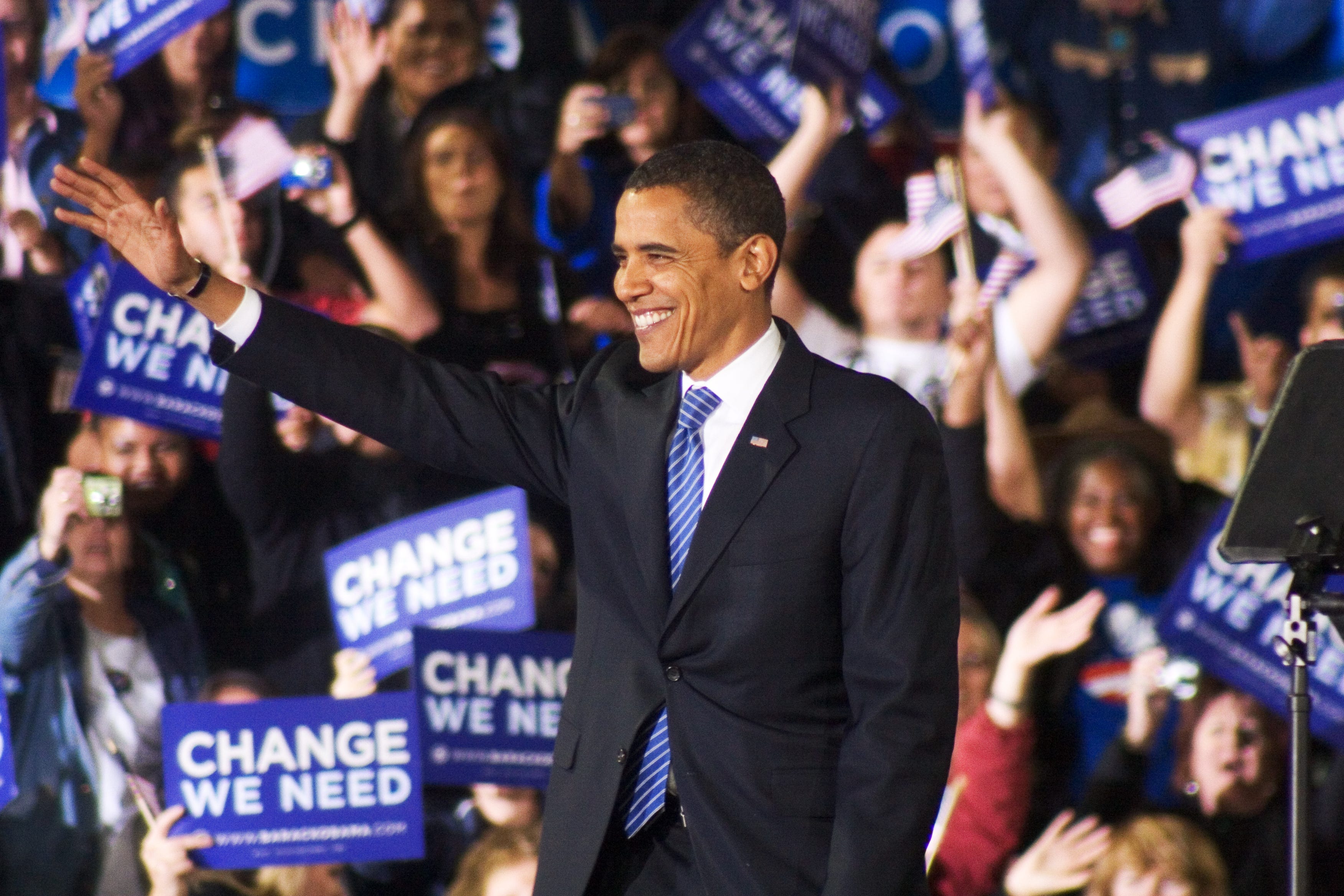
Our data also reminded me of Barack Obama’s opposition to the Iraq War. It’s fascinating to go back and read the first speech he gave opposing the war. In October of 2002, still just a state senator representing Hyde Park and speaking at an anti-war rally, Obama had a crowd and a constituency that would have cheered on a rabidly left-wing stance.
But instead of delivering red meat, he spent the first half of the speech emphasizing that he supported lots of other wars and would willingly take up arms himself in a just war, but opposed this specific war because it was dumb:
Good afternoon. Let me begin by saying that although this has been billed as an anti-war rally, I stand before you as someone who is not opposed to war in all circumstances. The Civil War was one of the bloodiest in history, and yet it was only through the crucible of the sword, the sacrifice of multitudes, that we could begin to perfect this union, and drive the scourge of slavery from our soil. I don’t oppose all wars…
My grandfather signed up for a war the day after Pearl Harbor was bombed, fought in Patton’s army. He saw the dead and dying across the fields of Europe; he heard the stories of fellow troops who first entered Auschwitz and Treblinka. He fought in the name of a larger freedom, part of that arsenal of democracy that triumphed over evil, and he did not fight in vain. I don’t oppose all wars.
After Sept. 11, after witnessing the carnage and destruction, the dust and the tears, I supported this administration’s pledge to hunt down and root out those who would slaughter innocents in the name of intolerance, and I would willingly take up arms myself to prevent such tragedy from happening again. I don’t oppose all wars. And I know that in this crowd today, there is no shortage of patriots, or of patriotism.
What I am opposed to is a dumb war. What I am opposed to is a rash war. What I am opposed to is the cynical attempt by Richard Perle and Paul Wolfowitz and other armchair, weekend warriors in this administration to shove their own ideological agendas down our throats, irrespective of the costs in lives lost and in hardships borne.
As president, Obama, of course, ordered the raid that killed Osama bin Laden and deployed drone strikes to kill terrorists, even as he ended the war in Iraq and drew down forces from Afghanistan. He was trusted on national security issues, winning 365 electoral votes in his first run and 332 in his second.
At Searchlight, we take the use of data seriously and think it’s important to be clear about when conclusions are supported in a belt-and-suspenders way, and when there is more ambiguity. In this case, I am leaning on my own interpretation, but it is one informed by both our own data and past experience, and I see little reason to think the relevant dynamics have fundamentally changed.
The bottom line is that what our poll results, combined with the lessons of relatively recent history, suggest to me is that there’s a real Nixon-goes-to-China dynamic at play here, where the American people will be most persuaded to oppose wars by a leader who they see as pro-military and unafraid to embrace and deploy American power.
There is no contradiction between aggressively embracing our military and making the case against war. Indeed the opposite seems to be the case: In the eyes of the American people, being pro-military will put you in a stronger position to oppose dumb wars.
Hopefully Trump's blundering in Iran won't lead too many Democrats to call for slashing defense spending. There are defense programs we could reasonably trim, and more cost-effective ways to defend American interests, but the threats of China, Russia, and North Korea mean it would be dangerous for America to let its guard down.
Agreed. Obama made the key distinction. We must not take a stand against all wars, as that would provide an opening for our enemies. Conversely, it is vital that the U.S. re-evaluate its enemies and be absolutely clear to the public about who they are and under what circumstances the U.S. would generally intervene via force. But there are a number of issues that adjoin this discussion that must also be addressed: the size of the defense budget, the ability of the president to unilaterally decide when to go to war, and various ethical issues involving those who would profit from defense contract and prediction markets and the like.