

More than 60 years have passed since Pulitzer Prize-winning historian Richard Hofstadter published The Paranoid Style in American Politics, a searing exposé of the way conspiratorial thinking has forever shadowed our democracy.
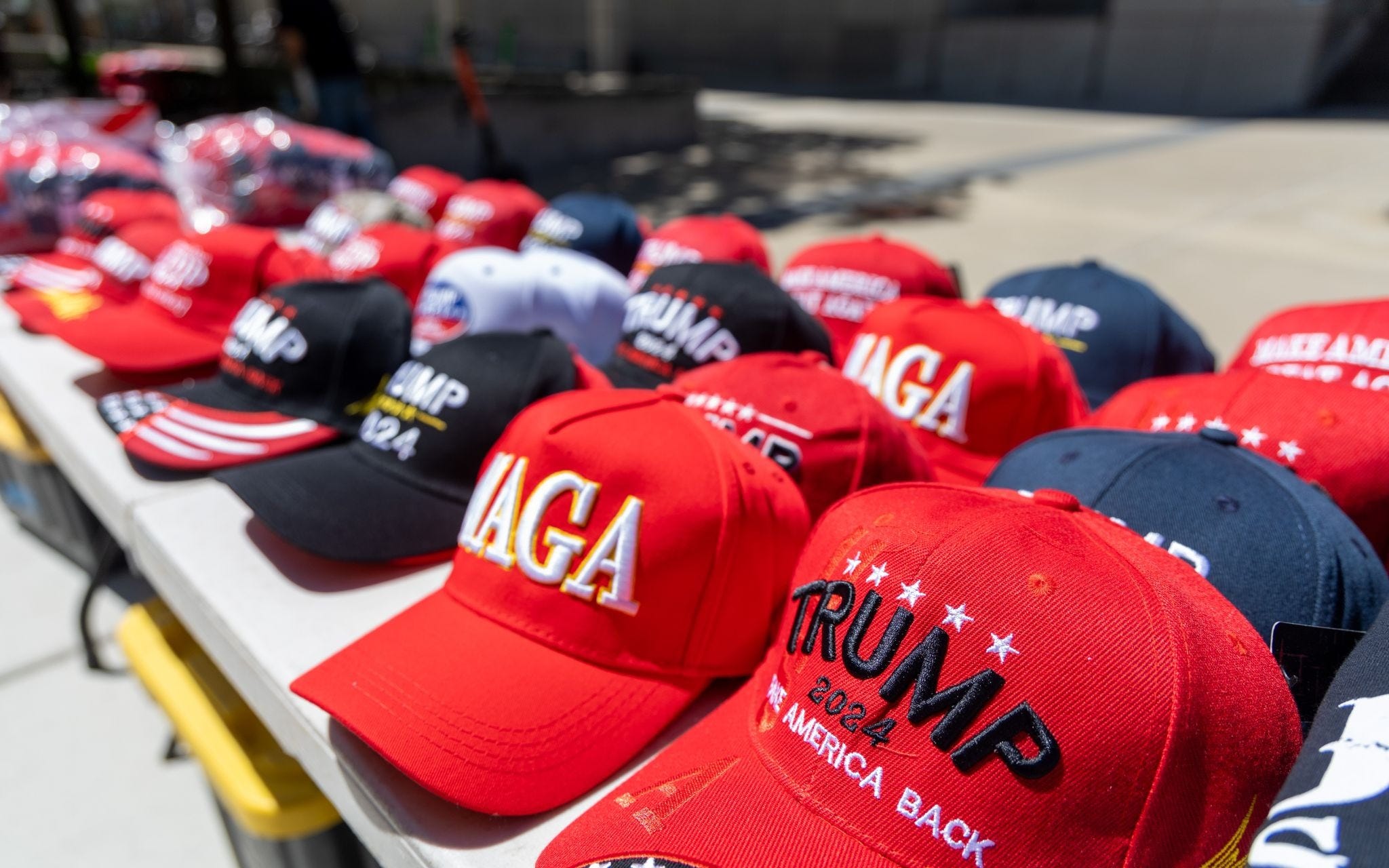
His book, published a decade after the horrors of McCarthyism and a year before Barry Goldwater claimed the GOP nomination for president, has once again been proven prescient by Donald Trump’s dominance of American politics.
Hofstadter’s argument was that paranoia was a very real, yet fringe political phenomenon that existed primarily on the American right. Trump’s political career has been premised on the paranoid notion that some band of conspirators—most notably the “deep state”—is responsible for the “carnage” that he alone could end.
This has had the effect of moving a politics of paranoia to the very center of the American right. But I’d argue that, in ways we don’t fully appreciate, the left has embraced much of the same sort of paranoid mindset. The upshot is undermining our ability to build what my colleague Adam Jentleson describes as a “supermajority.”
Admittedly, the left and right’s respective fears of centralized authority aren’t manifested to the same depths, as evidenced by the fact that nobody on our side seems nearly so inclined to storm the Capitol. But if the right has evolved from being cynical about government to believing it’s conspiring against them, the left has moved more quietly from advocating for more expansive government to strangling public authority in service of protecting the powerless. And it’s this second shift that deserves greater attention.
Before going any further, we should properly understand the distinction. Both New Deal Democrats and Reaganite Republicans embraced certain theories of what needed to change for America to become her best self. In the first case, liberals believed we needed to empower government to solve big problems. In the second, conservatives argued that we needed to push the government out of the way of free enterprise.
While those ideas still float around their respective circles today, the old narratives have more recently given way to something else entirely—a notion that some nefarious group is cutting away at the common good. Those on the right blame the egg-headed intellectuals and social justice warriors, many of whom, in their view, control the levers of public bureaucracy. Those on the left ascribe our severe housing shortage, dilapidated infrastructure, and warming climate to the nefarious influence of tech plutocrats and corporate monopolists, so many of whom have purchased access and influence at the highest reaches of government.
The shame isn’t just that elements of both stories are true—it’s that both conspiracies distract us from the more banal reasons America is struggling. Evidence in the 1960s and 1970s that discretion among government officials was a scourge—that they were too prone to raze neighborhoods through urban renewal and approve industrial plants that soiled the public landscape—led reformers to clip bureaucracy’s wings. And we reacted by imposing process-oriented restrictions on executive branch agencies to ensure that public authority wasn’t used for bad.
Those restrictions have certainly made our air cleaner and empowered the average citizen to protect themselves against the powerful elite. But they’ve also largely rendered the government unable to address some of society’s greatest problems. They have eviscerated what so many people now refer to as “state capacity.” But there’s no grand conspiracy here—just well-intentioned 20th-century reforms gone awry.
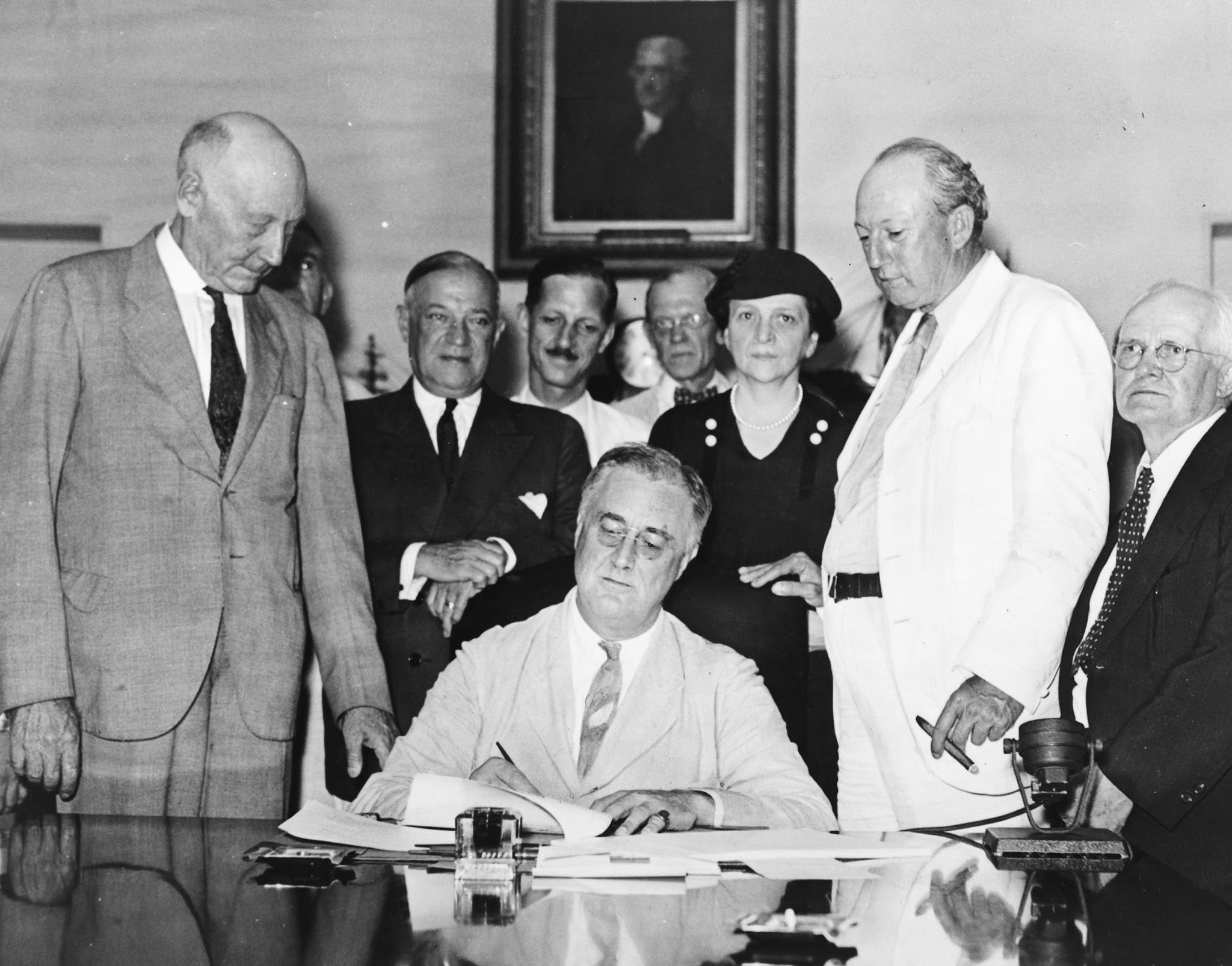
I want to be clear on the terms here. In his famous 1937 Constitution Day speech, FDR declared: “In our generation, a new idea has come to dominate thought about government, the idea that the resources of the nation can be made to produce a far higher standard of living for the masses of the people if only government is intelligent and energetic in giving the right direction to economic life.” This became the central tenet of liberalism in the following decades, and in some more intellectual notion, it remains the heart of the progressive project. But with conspiracy thinking now shrouding our belief in public power, I ask: Is it really our animating narrative anymore?
Ronald Reagan, perhaps the most important 20th-century answer to FDR, summed up conservatism with his oft-quoted aphorism: “The nine most terrifying words in the English language are: I’m from the government, and I’m here to help.” This long defined the Grand Old Party. But today, as Donald Trump unilaterally increases the price of consumer goods by imposing tariffs on a whim, and deploys masked federal officers to our streets in ways that flirt with undermining the rule of law, or worse, can we really argue that Reagan’s creed is still central to GOP dogma?
It’s not that FDR- and Reagan-style liberalism and conservatism didn’t cast bogeymen—they both certainly did, including Wall Street financiers and “welfare queens.” But both dogmas were anchored in core notions about how government ought to work. Today, by contrast, a perusal of stump rhetoric on both sides of the aisle suggests that, even if Democrats and Republicans are prone to nod their heads to the old narratives, their respective appeals are centered on something else altogether: thwarting malign actors who are actively conspiring against our common interests.
In some cases, the threats are personified—note the dual focus on Elon Musk and George Soros. Sometimes they are focused on subsets of the population—immigrants or Zionists. Sometimes they are more amorphous—corporate monopolists or critical theorists. Some of these indictments have merit, while others are so ridiculously unfounded that adherents are prompted to raid pizza restaurants in search of pedophilia dungeons or assassinate public intellectuals with high-powered rifles. However they differ, they are all born from the same underlying paranoia that Hofstadter identified during the Eisenhower administration and that Sean Wilentz summarized as “a frightening view of the opposition as the superhuman incarnation of perfect evil, endowed with superhuman powers of deception.”
The shame of paranoia’s triumph is threefold. First, and most obvious, wholesale endorsement of conspiratorial narratives belittles the smaller conspiracies that are real. Jeffrey Epstein was a true reprobate, doing terrible harm to a very real set of victims; he may well have been abetted by a network of powerful men and women. But in some circles, the dastardly conspiracy has risen to be viewed as evidence of some broader darkness, as if a full airing of the Justice Department’s files will reveal a modern-day illuminati-like phenomenon.
Second, when paranoia consumes so much political oxygen, the political system is rendered incapable of responding to very real problems. In Making a New Deal, Lizabeth Cohen made clear why ordinary people were suddenly willing to turn more authority to FDR’s government bureaucracies in the early 1930s—the old system of mutual aid had failed. Similarly, Reagan’s antipathy toward government reflected a widespread belief that government had become a problem. We too easily forget that Jimmy Carter’s, Ted Kennedy’s, and Ralph Nader’s consensus view during the late 1970s was that federal regulation was, in many cases, overwrought to the point of catastrophe. Reagan was responding to something even the left acknowledged to be real.
Today’s conspiratorial thinking is so pervasive that we’ve lost sight of the real things standing in the way of broader and deeper American prosperity, namely government’s inability to deliver what people want. We’re not building enough housing, or hardening our infrastructure, or taking full advantage of the clean energy revolution. We’re not teaching kids to read, or bringing down the costs of health care, or responding to the ways younger generations feel that the social contract is broken. Government fundamentally doesn’t work.
Indicting some conspiracy of monopolists, on the one hand, or campus activists, on the other, does not address the underlying source of the public’s frustration and dismay. For those of us on the left, that seems obvious enough when it comes to, say, trans activists. But the specious notion that financial cabals have gobbled up the ownership of single-family homes around the country to drive up rents is a clear and present distraction from the real reason housing costs are so inflated: process-oriented reforms have made it too hard to add supply to the market. This, in turn, drives up rent and mortgage payments.
And that then points to the third shame, which falls disproportionately on Democrats. Whether we like it or not, we are the party of government. People who want more done to fight economic inequality, combat social injustice, and restore the American Dream are right to presume that we’re the movement more willing to apply public authority toward those ends. But if the ordinary voter’s (correct) impression is that government is fundamentally incompetent—that it is incapable of making progress on those fronts—many are going to be tempted to exit our tent, no matter how big we stretch it. And so long as the movement is transfixed by a paranoia that’s focused on the nefarious influence of shadowy right-wingers, we’re unlikely to address that problem.
Not so long ago, denizens of the so-called neo-Brandeisian left—a movement focused in theory on the threat of monopoly power—tested their anti-corporate messaging against the catch phrases that define the so-called Abundance movement that is focused, apart from castigating business-led conspiracies, on efforts to build more housing, reform our permitting system, drive technological innovation, and more. The anti-monopoly crowd crowed when their anti-corporate message proved more compelling.
But that should have come as a shock to no one: Messages that pit good against evil are bound to draw more interest and tear at heartstrings more than dry notions of how we can enhance “state capacity.” Page Six likely draws more clicks than the New York Post’s coverage of City Hall for the same reason. The point, in the end, isn’t about our visceral reaction to political rhetoric—it’s about the realities that shape what Walter Lippmann once called the “pictures in our heads.”
Americans have, beneath their partisan jerseys, and voting records, and polling responses, narratives in their minds about how the world works. They know, having waited interminably at the DMV, or seen road reconstruction projects run late and over budget, that government doesn’t work. They’re right on the merits. But the reason that government doesn’t work has less to do with some conspiracy and more to do with the fundamental tensions within government that are, to note, the focus of those associated with the so-called Abundance movement. That’s why, polling aside, the effort to build state capacity is so crucial for the left.
This isn’t the first time that paranoia has played such a profound role in American politics—that was a message from Hofstadter’s original essay. And it won’t be the last. But Washington, and Democrats more specifically, need to realize that the salve for the underlying frustration Americans have at this moment is not served well by our reliance on conspiratorial narratives.
Democrats should call out bad actors. But whatever tactical strategies we employ in any given campaign can’t be allowed to obscure our own sense of why nothing seems to work. The party of government needs to ensure that public institutions can deliver. Changing that story in people’s heads will have a more consequential effect on the movement’s progress and destiny than any political knife fight over competing paranoias.