

Last night, we witnessed the beginning of what could be a new era in American politics. The collapse of the MAGA coalition. The rise of the Big Tent Democratic Party.
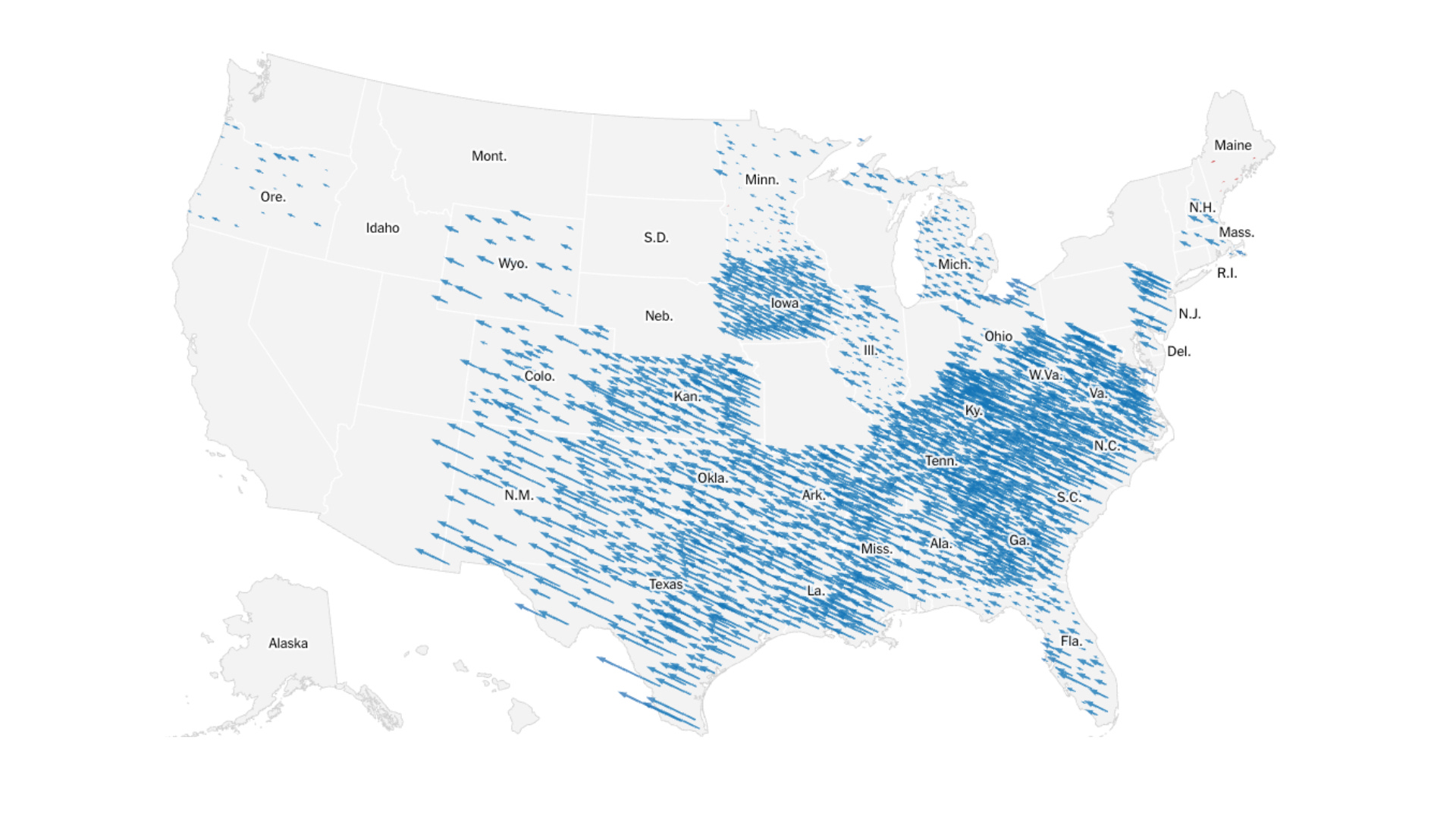
We flipped Senate seats in Texas, South Carolina, Kansas, and Iowa. We turned Republicans’ gerrymandered districts into dummymanders. Counties that had backed Trump by as much as 30 points were painted blue. The states that normally turn on razor-thin margins, like Pennsylvania, Michigan, and North Carolina, were not close. We saw an insta-call for a Democrat running for Senate in Georgia — truly something to marvel at.
A few months ago, I wrote an essay in the New York Times that laid out what an optimistic midterm might look like, given the fact that Democrats were embracing the exact sort of ideological diversity they needed to expand the map: “In every Senate race where, under favorable conditions, they are in contention, we will gain eight seats, taking a 55-seat majority.”
When we’re done counting votes in Alaska and Mississippi, my prediction might’ve been an underestimate. In January, JD Vance could be swearing in nine new Democratic Senators, and the Senate majority will be at 56 seats. That means a supermajority is within arm’s reach, and in two years they’ll have the opportunity to grab it.
Multiple ingredients go into a win this big. The first factor was obviously the backlash to Trump. When you start a reckless war abroad and raise the cost of living at home, the American people will notice. Trump’s galling levels of self-enrichment also seem to have finally made an impression on the voters, as corruption was one of the deciding issues this election.
But voters didn’t just oppose Trump; they also cast their ballot for heterodox candidates who followed an old and oft-forgotten lesson in American politics: Run on the issues that appeal to the voters in your race.
James Talarico built a historic coalition of Hispanics, disaffected long-time Republicans, and young voters to finally achieve the dream of a Blue Texas. He called himself a “border security Democrat” and pledged to stand up to his party on energy policy. He also threaded together issues like political corruption and corporate greed and connected them to voters’ concerns over cost-of-living. In the governor’s race, Gina Hinojosa unseated the seemingly invulnerable Greg Abbott with a campaign that blended a left-wing populist position on data centers and a tack to the center on crime and culture. In one ad, she said, “My pronouns are mom, Texan, and soon to be governor.”
Kansas elected the first Democrat to the Senate in nearly a century. Adam Hamilton, the megachurch pastor and community leader, called for an end to political corruption, but also promised to tackle the affordability crisis with an “all-the-above” energy strategy. In Iowa, Josh Turek blended prairie populism with a pragmatic stance on issues of trans participation in sports. Rob Sand, a politician who built his career on a brand of clean and accountable government, and separated himself from the national party, coasted in the state’s gubernatorial election.
From the Rio Grande Valley to the Lehigh Valley, we saw Democrats flip congressional seats by denouncing special interests such as AIPAC, while assuring skeptical voters that they agreed with them on important cultural values. Even in Michigan, Abdul El-Sayed closed with a message that promised border security and penned an op-ed for Fox News targeting skeptical Trump voters.

It’s worth remembering how implausible all this seemed just a year, or even really a few months ago.
When my book Supermajority was published in September, I set an ambitious goal for the Democratic Party: 60 Senate seats and 370 votes in the Electoral College. To build this sort of durable political power, I said Democrats needed to expand into deep-red terrain and compete in swaths of the country that many pundits and political strategists had written off years ago.
Last night, that’s exactly what we saw. Democrats across the country successfully campaigned as a big tent. It’s possible to elect DSA candidates in our bluest cities and flip Senate seats in some of our reddest states.
Some will say that a coalition that stretches from Claire Valdez in Brooklyn to Jamie Ager in rural North Carolina couldn’t possibly hold, much less pass any real policy change. But this, too, is wrong; ideological diversity was a trademark of the governing coalitions that delivered the New Deal, Civil Rights, and the Great Society. The Democratic tent might be unruly, but when it comes to goals like achieving universal health care, expanding the safety net, and making rich people and big corporations pay their fair share, there will always be far more that unites us than divides us.
In the grand scheme of things, last night was just the first step in what will hopefully be at least a two-cycle process.
We learned that the map is far more expansive than many imagined — if Democrats expand the map to Kansas and Mississippi, then there’s no seat that is truly safe for Republicans.
But if we want to achieve the congressional supermajority that is a prerequisite to sweeping policy change, then we can’t forget the sort of heterodox politics that made last night possible. The big tent is the future of the Democratic Party. It can defeat right-wing authoritarianism, and when it holds governing power, it can deliver for the American people.
After last night, we know we don’t have to settle for narrow majorities — that we can break this cycle of polarization we have been stuck in for more than a decade.
Now, we know what is possible. And we’re just getting started.
Yes. Here's a suggested list in no particular order: executive branch investigations including full release of the trump/epstein files; investigation of trump family finances; impeachment of trump, hegseth, and blanche; anti-corruption legislation, including ethics reforms, financial disclosure mandates, campaign finance reform, and limitations on oligarch influence; limitations on executive branch war power including actual and effective oversight; trade & tariff oversight; judicial nomination blockage; AI regulation; labor & civil rights enforcement and ICE investigations; restoration of social programs including ACA credits; investigations concerning the buying of pardons; and finally, although it is a high bar, constitutional amendments to limit presidential pardons and presidential immunity.