

Ashley Schapitl is a 15-year veteran of Congress and the Executive Branch, having most recently served as Deputy Assistant Secretary for Public Affairs at the U.S. Department of the Treasury and Chief Communications Advisor at the Senate Finance Committee. In these roles she oversaw communications strategy for passage of and implementation of the Inflation Reduction Act. In her spare time, she serves as an Advisory Neighborhood Commissioner in Hill East and writes the Capital Commonsense Substack with fellow Washingtonians.
While Democrats have a lot of policy ideas, it’s less clear how they’re planning on raising the revenue necessary to pay for them.
I spent four years on the Senate Finance Committee, from 2019 to 2023, working to solve this exact problem. We proposed a dozen different policies, but only two of the major revenue provisions—the Corporate Alternative Minimum Tax (CAMT) and the excise tax on stock buybacks—were signed into law.
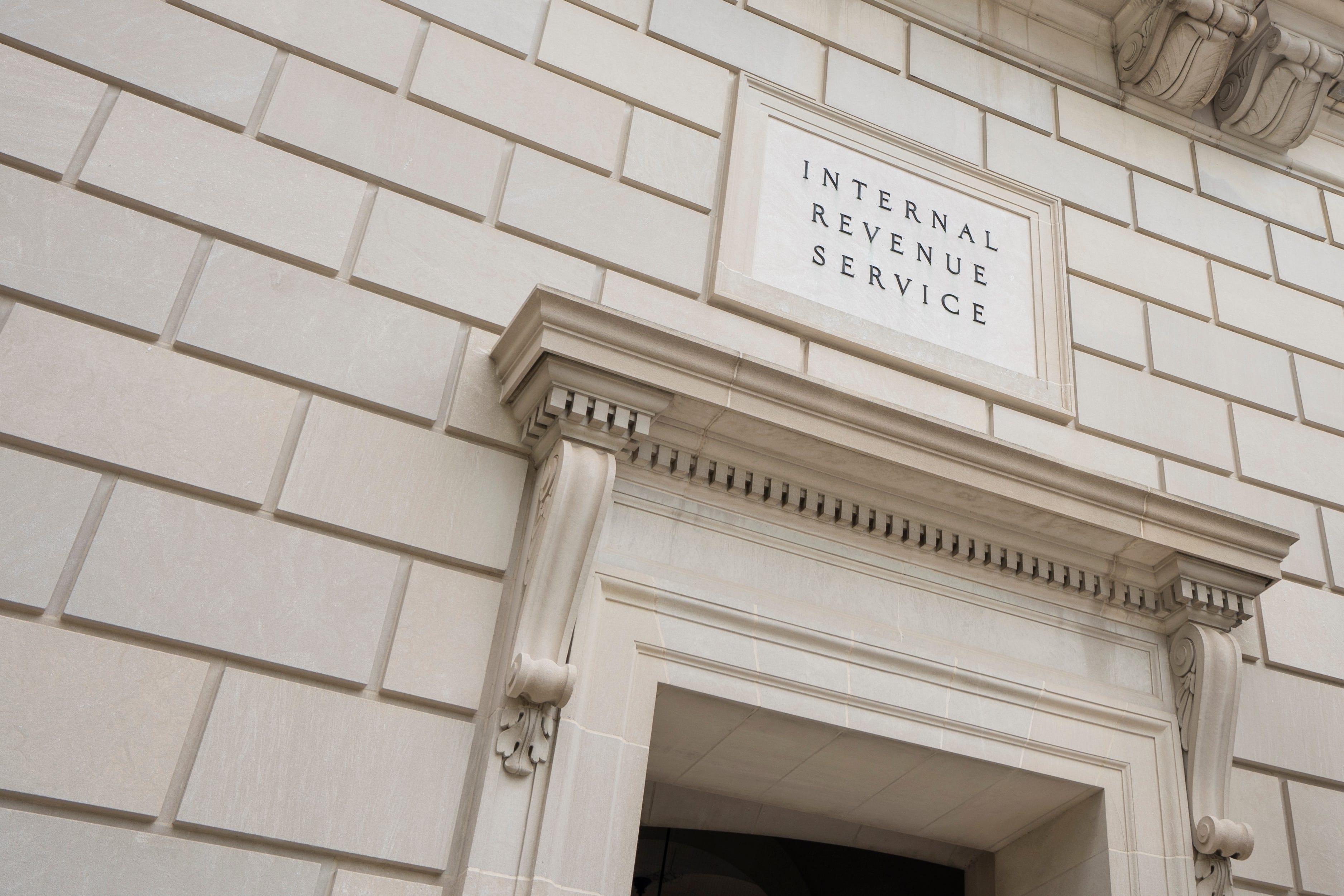
There was another somewhat overlooked provision: $80 billion was allotted to enhance capacity at the IRS.
Funding the IRS wasn’t the flashiest idea, but our theory of the case was that working people had to see the federal government prioritizing the enforcement and collection of tax obligations from the ultra-wealthy—those who could afford to dedicate resources to avoiding their taxes.
Following the law’s passage, I moved to the Treasury Department and led messaging efforts on how to sell this massive investment to the public.
I saw what the agency could do when it had the resources to do its job and change the incentives for tax avoidance at the very top of society. We pursued high-income non-filers, audited corporate jets, and unwound byzantine partnership structures.
Unfortunately, Trump and his GOP majority defunded our nation’s tax police, and much of this work was reversed. But this experience gave me a window into what America would look like if we had the sort of trust in our tax system that many Scandinavian countries have—when the public knows that everyone, including the ultra-wealthy, is paying their fair share.
I knew Republicans would never support this work, but what surprised me the most over the past two years was how my progressive allies began to mimic anti-tax GOP talking points. What started as a murmur has now turned into a full-blown bipartisan tax revolt.
While there are many examples, I’ll point to the one that has troubled me the most: Senator Cory Booker’s plan to exempt those making under $75,000 from federal income taxes by doubling the standard deduction. This reform alone would amount to a $5 trillion tax cut, one of the biggest in American history, and it would weaken our ability to not just expand social welfare programs, but fund our current ones.
I understand the impulse here. Democrats have seen Republicans promise tax cuts in exchange for political support for decades. But there are signs that this message is no longer working. A recent Politico poll showed that only 9% of voters say taxes is the most important issue, and tax cuts are significantly less popular than tax increases on the wealthy.
To advance good politics, Democrats don’t need to become a watered-down version of the anti-tax GOP. And to pass good policy, Democrats simply can’t fund the robust social safety net Democrats say they support if the party is going to adopt the view that only high earners should pay federal income taxes. Nor should revenue from new taxes on the wealthy be directed to blunt, costly tax cuts, rather than toward expanding social programs and credits that benefit low-income Americans.
As Democrats gear up for 2028, we need to combat this tax revolt and restore voters’ faith in our tax code.
There are a lot of great ideas for tax reform: raising the corporate tax rate, cracking down on loopholes that benefit wealthy small businesses, ending step-up in basis—but I want to focus on the one I had experience with: refunding the tax police.
If Democrats take back power, they need to restore robust funding to the IRS. And they should pitch this as an effort to unrig the economy and make the rich pay their fair share.
They should start small and secure quick wins. While complex audits of multinational corporations are important, these take time, and it’s better to deliver a proof of concept. Start with the low-hanging fruit.
For instance, in February 2024, the IRS launched an initiative targeting roughly 125,000 cases of high earners who simply had not filed a return since 2017—more than 25,000 of them with income above $1 million, and over 100,000 with income between $400,000 and $1 million. These were not particularly complicated cases; people just hadn’t filed at all. The only reason the program had lain dormant was that the agency lacked the staff to work the cases. This initiative quickly showed results. Within a year, these delinquent millionaires coughed up $1.3 billion in tax dollars.
A parallel effort opened audits into corporate jets that were written off as business expenses, when they were actually used for personal travel.
Not even the loudest anti-IRS member of Congress wants to defend a millionaire who didn’t bother to file or a private-jet user who was claiming a bogus tax break. And even relatively small-dollar wins had the power to demonstrate we were committed to enforcing the tax code at the top.
It’s important to remember that this can be redistributive policy. The Congressional Budget Office has estimated that $1 provided to the IRS for these types of efforts can return $6 of already-owed taxes from the wealthiest Americans.
To build on the work the IRS did under the Biden administration, the IRS should also invest in new technology. The wealthy avoid and evade taxes with complexity, creating pass-through structures, tiered partnerships, layered entities that no human auditor can track in any reasonable amount of time. That is precisely the terrain where the IRS should begin deploying machine learning: unpacking large, complex partnerships in a multibillion dollar initiative, and using models to decide which complicated returns are worth a closer look. And with IRS staffing down by more than a quarter, the use of AI will be a necessity in a future Democratic administration.
Ultimately, it all comes down to rebuilding trust in our tax system. A recent Pew survey found that 61% of Americans are bothered “a lot” by the feeling that some wealthy people do not pay their fair share, and roughly four in five are bothered at least somewhat. At the same time, a poll from Searchlight found that the vast majority of Americans believe paying taxes makes them a good citizen.
Democrats need to learn this lesson: voters aren’t frustrated by the fact that they have to pay taxes; it’s that they don’t trust that other people are paying their fair share too.
In the end, a tax revolt is a legitimacy problem that must be answered by showing that the people at the top cannot simply buy their way out. Make the rich pay and make sure everyone else knows it. Then, we can expand the sort of social programs so many Americans rely on.

Well done