

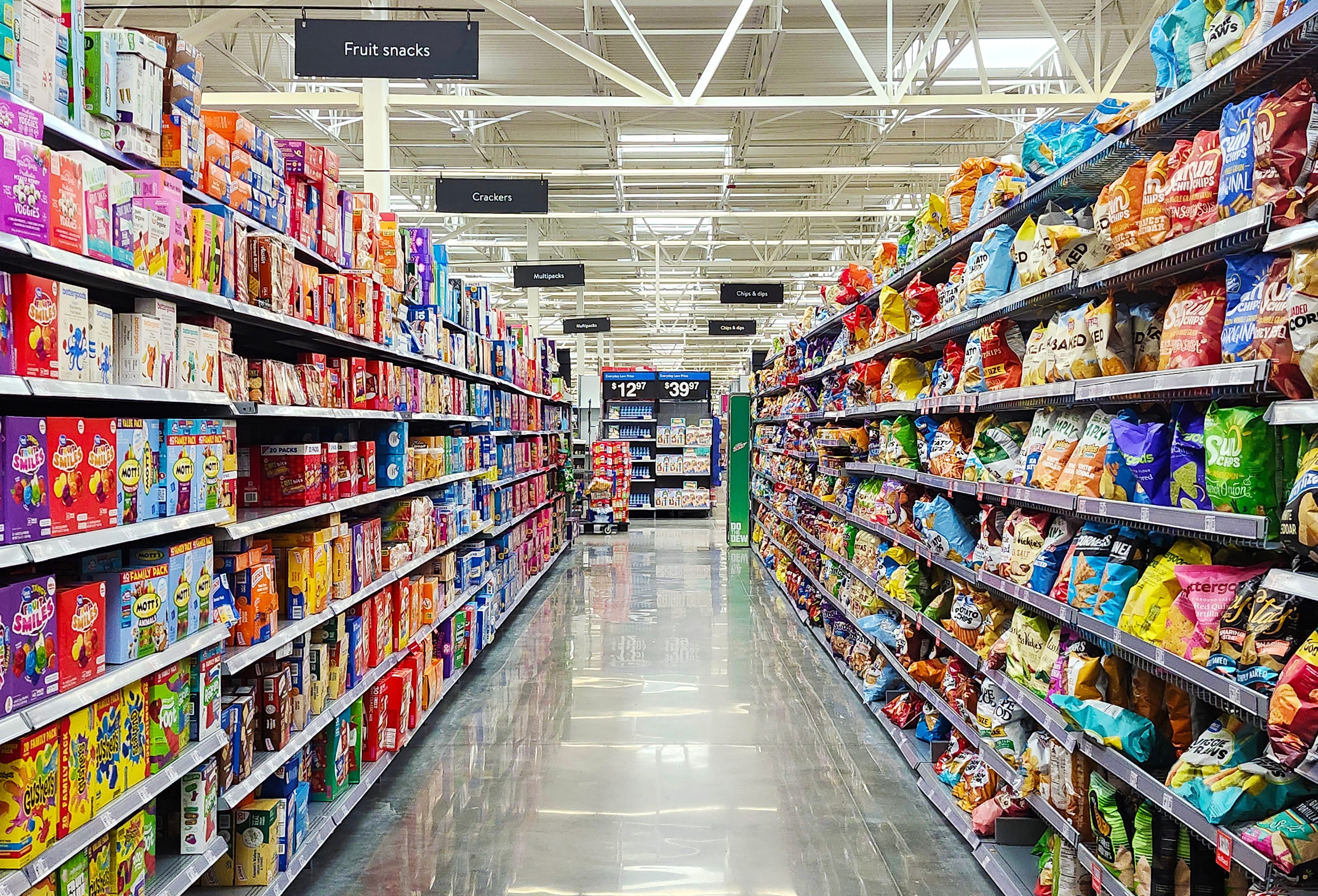
There’s been a growing divergence inside the Democratic Party on how exactly to solve the nation’s affordability problem. The cost of key household expenses like housing, health care, and food has risen faster than the overall rate of inflation over the last several years, and voters remain frustrated with these cost dynamics. In response, liberal organizations have released a flurry of proposals meant to deliver fast returns to American households. I’m worried that too many of these efforts will amount to ineffective “get rich, quick” schemes.
Unlike a host of other issues, the fault lines of the affordability policy debate are a bit unexpected. There’s not a clear split between where moderate and progressive organizations stand on the preferred path forward. Most recently, the Center for American Progress surprised many by introducing a proposal to apply temporary price caps on the cost of certain grocery items.
Although I’m sympathetic to other critiques I’ve seen of the specific proposal and food price caps broadly, a lot of my opposition stems from a broader concern that the authors are underestimating the difficulty of implementation and bypassing solutions we’d actually want in place at all times. There are better ways to deliver immediate price relief to Americans.
The juice is not worth the squeeze
To encourage industry participation, the recent grocery price control proposal calls for a host of new incentives and penalties. Industry participants could be rewarded with benefits like capped credit card swipe fees or exemptions from the current tariffs. Meanwhile, companies choosing not to participate could be denied procurement contracts to feed kids in school and even recovery funds in future crises, among other enforcement mechanisms.
Each of these details raises thorny implementation questions that would have to be solved:
What new processes would be required to cap credit card swipe fees and provide tariff exemptions only for the participating companies, which could have a range of facilities scattered across states?
If companies choosing not to participate are denied federal contracts, what implications are there for local areas that may only have access to one or two food suppliers for their schools?
Would federal contracts be denied just for the duration of time that the price caps are in place, or for longer?
How far into the future would companies be denied access to recovery funds amid economic crises?
Would additional processes be needed to distinguish between companies that refused to participate and companies that were established after the temporary price caps period (and could that process actually slow down the delivery of recovery funds to eligible businesses)?
This is to say nothing of the additional oversight called for in the proposal so participating businesses do not abuse the negotiated price declines:
“As part of the affordability contract, retailers, food processors, and consumer goods corporations would be required to commit to ensure participants do not use the price agreement as leverage to depress wages or command unfairly low prices from farmers. For example, the Commerce Department and the USDA would monitor pricing data received from the industry, along with information obtained through engagement with labor unions, from ranchers and growers via the farmerfairness.gov portal”
It’s not immediately clear whether participating companies would be stripped of all incentives if individual locations fell short of the agreement, sales at specific locations might be omitted from incentive opportunities, or eligibility would just be assessed according to company-wide numbers.
My strong suspicion is that this is a tall task for such a short payoff. Assuming all these details could be ironed out, a household of four is just expected to save $134 annually for the two years the plan is in place. Every administrative hurdle could be surmountable, but that doesn’t mean establishing this sort of transient infrastructure is worth the effort.
Prioritize durable solutions
Policymakers would be wise to spend the political capital and resources required to implement the grocery price control proposal on policies that yield more benefits over time. This includes generating quick returns by reforming existing federal price controls (rather than establishing new ones). As an example, the government is responsible for trillions of dollars of payments via Medicare, and sets the price of services. Medicare reimburses hospital systems almost double what it pays to standalone physician’s offices for identical services.
By applying the rates already paid to standalone physician’s offices, the government could save itself and patients money and limit healthcare inflation. And unlike temporary grocery price controls, “site-neutral” Medicare payment reforms should be kept in place for good.
There are also more constructive ways to specifically address food affordability in the short term. In addition to outright eliminating the food tariffs imposed by the current administration (not just for a subset of the sector), policymakers could consider using the savings from site-neutral payment reform to help bring back the popular universal free school meals program, and make it permanent. Research has shown that local adoption of free lunch for all students in the 2010s made it easier for households to stock their fridges. Even in the first year with the expansion in effect, households with school age children required fewer trips to the grocery store. This reduction in demand then corresponded with lower grocery prices for the broader community. Similar benefits could be generated with an expansion to all school districts now.
The Biden administration may have been perceived as far too blasé about inflation, but there is a risk of overcorrecting by chasing polls with policies that sound nice yet are unlikely to deliver meaningful results. Liberals should prioritize affordability policies that we would want enacted in any environment, not just as a response to a spike in inflation. Some of these policies are in CAP’s recent proposal: eliminating local land restrictions that inhibit new grocers from entering food markets and ensuring that farmers have the right to repair their own equipment. I’d continue to focus on those reforms, but look elsewhere for faster-acting fixes for consumers.
There’s an opportunity ahead to lay out a more robust affordability agenda. However, liberal policymakers should avoid featuring transient policies with small returns as central pillars. It’s critical that the focus remains on permanent solutions that lower the cost of living for Americans.
Housing, education, healthcare - there is a reason Democrats have long paid attention to those big spending categories. We need effective solutions, not getting distracted by small bore stuff.