

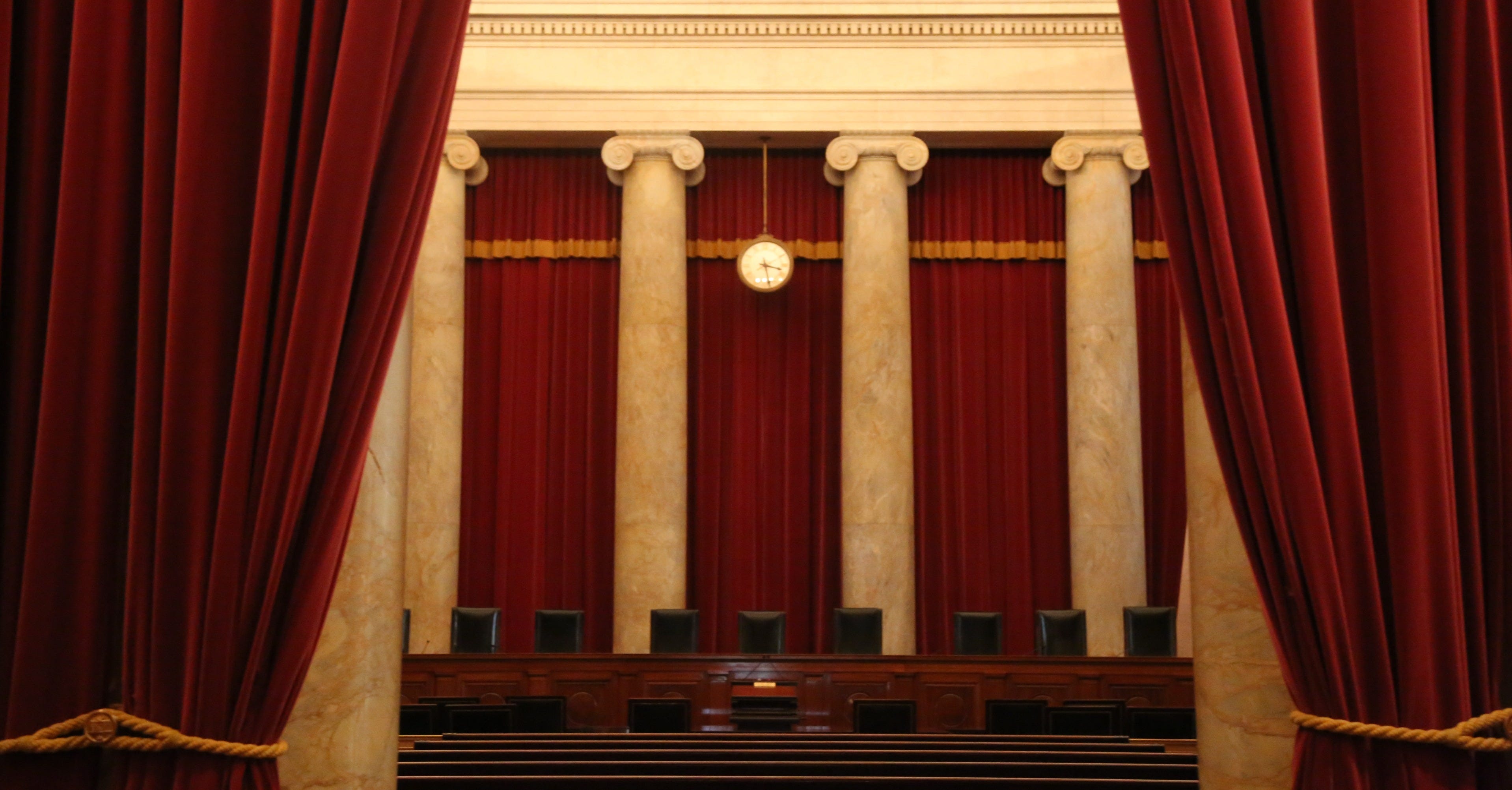
To date, Supreme Court Chief Justice John Roberts has been perfectly happy granting nearly unchecked powers to Donald Trump.
Nearly.
Roberts has finally had enough of Trump’s tariffs and is begging Congress to please, for the love of god, do its job — thank you very much. You don’t have to get too far into the opinion of Learning Resources, Inc. v. Trump to get a sense of the Chief Justice’s exasperation.
From the opening paragraph:
The Framers recognized the unique importance of this taxing power—a power which “very clear[ly]” includes the power to impose tariffs. And they gave Congress “alone . . . access to the pockets of the people.” The Federalist No. 48, p. 310 (J. Madison). The Framers did not vest any part of the taxing power in the Executive Branch.
The whole opinion is a stunning rebuke of Trump’s overreach, but it is also a clear plea for Congress to get its head in the game on these matters. Justice Gorsuch — no slouch on the whole ‘dangerous expansion of executive power’ front — actually did the republic a solid for once by driving the point home in a concurring part of the opinion:
…most major decisions affecting the rights and responsibilities of the American people (including the duty to pay taxes and tariffs) are funneled through the legislative process for a reason. Yes, legislating can be hard and take time. And, yes, it can be tempting to bypass Congress when some pressing problem arises. But the deliberative nature of the legislative process was the whole point of its design.
The thing is: it never should have gotten this far. Congressional Republicans have been all too happy to do the president’s bidding on the vast majority of his agenda because they also have believed in it. But on tariffs — in particular Trump’s retaliatory tariffs — many Republicans in Congress have been, at best, unwilling co-conspirators. At worst, they’ve done what House Republicans did by voting repeatedly to abdicate this particular Article I authority completely.
The impact of Trump’s tariffs has been the source of economic strain in areas of the country considered friendliest to Trump. It has led to yet another round of fiscally irresponsible bailouts for farmers bearing the impact of Trump’s misguided policy. You would think these two realities might spur more widespread reassertion of Congress’s role from the Republicans presently in charge.
And yet.
We have started to see nascent bipartisan efforts to claw back congressional influence over these matters, but the damage is already done—both economically and to America’s reputation with longstanding trading partners. Trump’s trade war has exacerbated an acute cost of living crisis and has virtually guaranteed a permanent “rupture” in international affairs that will have implications for generations to come. As my colleague wrote, the impact is already visceral.
Trump has swiftly vowed to take alternative routes in implementing his tariff agenda as it seems to be the only economic tool in which he consistently believes. Here again, a cross-ideological majority on the Court tries its best to nudge Congress toward finding its backbone:
The Framers gave “Congress alone” the power to impose tariffs during peacetime. And the foreign affairs implications of tariffs do not make it any more likely that Congress would relinquish its tariff power through vague language, or without careful limits. Accordingly, the President must “point to clear congressional authorization” to justify his extraordinary assertion of that power. He cannot.
What happens next in the aftermath of the Court’s decision also gives Congress a chance to get its mojo back. Trump’s tariffs have generated hundreds of billions of dollars in revenue built on the backs of consumers. Policymakers shouldn’t be shy about directing the administration’s actions with those funds. Personally, I think all of us taxpayers should channel our inner Mona Lisa Sappersteins and start petitioning our legislators for refunds from the tariff’s ill-gotten gains.

In short, Congress needs to Congress like it has never Congressed before. Do not shirk the responsibilities the Framers so plainly invested in the institution. Trump is no king and he cannot tax and spend as he sees fit. The people’s elected representatives have as much of a mandate as the executive, and the decisions made now will have ramifications long after Trump is gone.
The conservative supermajority on the Court is, for once, begging Congress to be a check on Trump. Republicans will not do it. There has never been a clearer opportunity for Democrats to say they will be the check Republicans refuse to be.
Congress is the first branch established in the Constitution for a reason. It should not take a civics lesson from the highest court in the land to remind our leaders of this fact.
Writing your representative to ask for refunds is fine, but for the U.S. to recover from this attack on Democracy, we must all do much more. Recognizing that we must fight fire with fire (e.g., gerrymandering) is unfortunately a necessary step. Once in power again, Democrats must make clear all of the failings that led to trump and maga and enact legislation to correct these deficiencies. This must include stacking SCOTUS and rolling back Citizens United v. FEC (big money in campaigns), Shelby County v. Holder (gutted the 1965 Voting Rights Act), Dobbs v. Jackson Women’s Health Organization (overturned Roe v. Wade), trump v. United States (presidential immunity), and many others. In addition, Dems must enact legislation that greatly strengthens ethics requirements of our elected leaders.
The Dems have a golden opportunity here to put a check on the presidency. However, the concurrences from the three liberal justices seemed to want to leave the door open for an executive with sweeping powers when it suits them.
Methinks SCOTUS is going to have to make a bunch more of these rulings, and it would be great if some of the members wouldn't be such homers for their respective sides.