

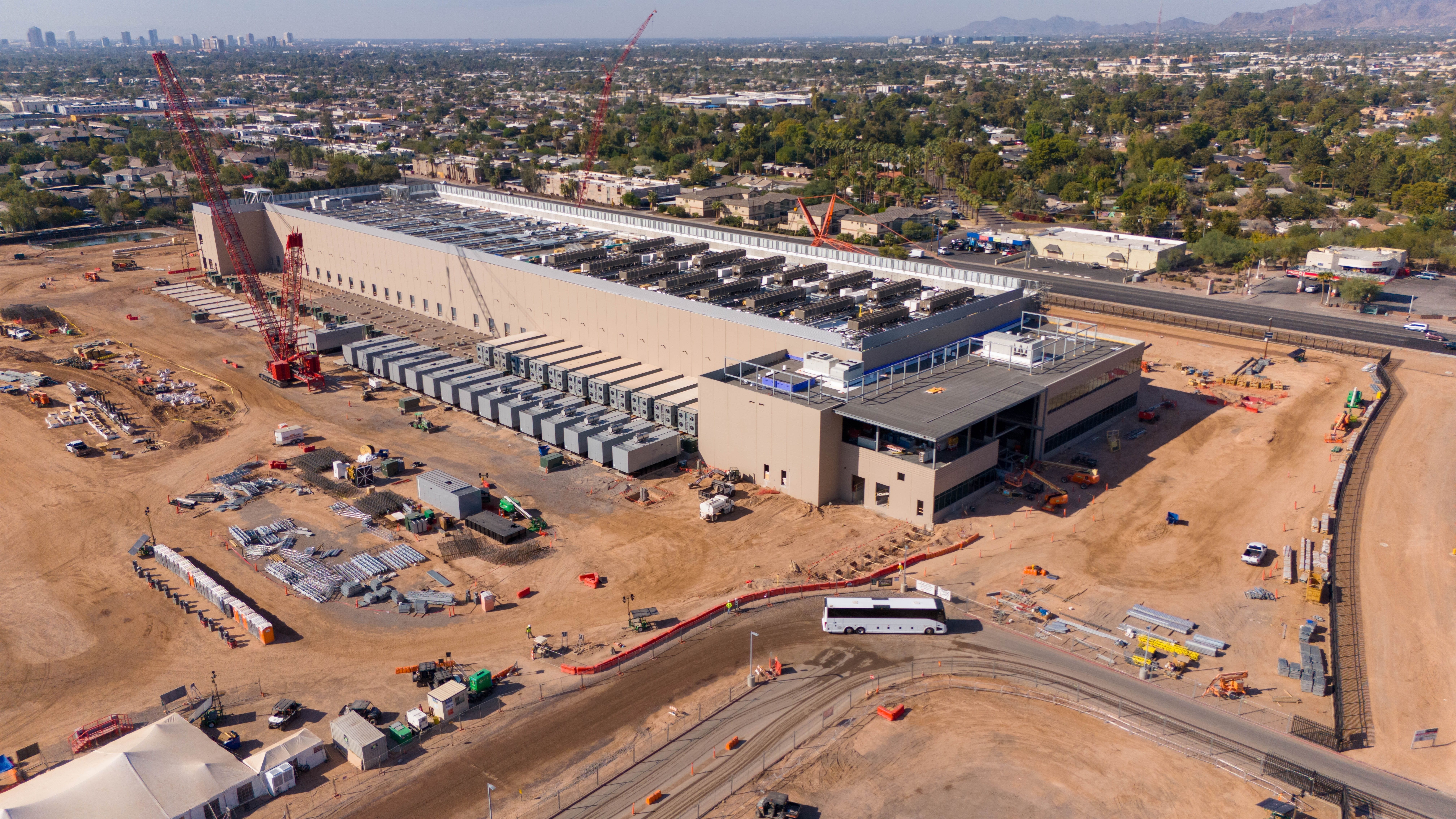
A growing number of climate advocates, energy experts, and national security officials are voicing their support for BAAJA—the new bipartisan permitting bill that was introduced in the Senate. They’re attracted to the provisions that will turbocharge the clean energy buildout, meet growing electricity demand, and help decarbonize the economy.
But there is another reason to like this bill: it contains the strongest data center regulations Congress will likely be able to pass while Trump remains in office.
The most important feature is that it makes data centers pay for the new energy transmission infrastructure required to service them and the energy demand they place on the grid. This is important because currently, as Robinson Meyer explained, “Utilities are forcing all of their customers to pay for the cost of transmission upgrades to serve those data centers.”
The bill goes further because it forces data centers to pay for any energy infrastructure that is “stranded,” meaning it’s built for data centers that don’t end up using it. It also allows states to charge data centers higher rates, which could then be used to subsidize the rates paid by other customers. Altogether, these regulations will significantly increase the regulatory burden on data centers and respond to voters’ concerns over rising energy prices.
In an Orwellian turn, critics are trying to misrepresent the bill and its strong accountability measures as somehow being pro-data center. Today, Ro Khanna said, “It would be tone deaf if Congress makes it easier to build data centers right after an election with bipartisan rage against shoving them down the throats of local communities.”
Big tech behemoths can’t be allowed to drive up energy costs for everyone else and data centers certainly shouldn’t be shoved down the throats of communities. But what Khanna misses is that BAAJA is our best chance to prevent this from continuing to happen.
So where is this pro-data center argument coming from?
Last week, notable anti-data center groups, including the Center for Biological Diversity, GreenLatinos, and Food and Water Watch, laid out their logic in a letter urging Congress to reject the “permitting bill’s sweetheart deal for data centers.”
Despite their striking claim, the listed reason here is indirect. They argue that by speeding up permits for energy infrastructure, the bill would make it easier to power the data center buildout. In other words, they’re opposing a bill that directly regulates data centers simply because it expands the grid and increases the energy supply data centers will be able to tap into.
This is deeply flawed reasoning, to the point that it doesn’t even make sense on their own terms. The alternative to passing these regulations into law is the status quo, which is the rapid data center buildout and utility hikes. Local and state moratoriums are obstructing some data center projects, but that’s the main roadblock. If data centers aren’t able to receive sufficient energy from the grid, many can simply generate their own sources “behind the meter,” which almost always means dirtier energy. Permitting reform could help end this practice because the grid would have expanded (and cleaner) capacity.
Even granting the premise that increased energy supply will benefit data centers, that argument needs to be weighed against all the numerous benefits for the climate and the economy that will come from dramatically increasing our electricity supply. It’s absurd to deny these positive outcomes simply over a fear that one potential user might benefit.
Some argue that BAAJA would make it easier to build data centers on federal land, but this concern is also overblown. Aside from a handful of data centers Trump is considering, the vast majority of these projects are built on private land and are not subject to the permitting regime BAAJA seeks to reform.
It’s important to think practically here. There’s no sign that Congress would pass, or Trump would sign, legislation that regulates or bans data center construction. So really, if the goal is to increase the regulatory burden on data centers before a potential Democratic trifecta in 2029, then this is a no-brainer: BAAJA is the only option.
But let’s end the credulity, because data centers are not the primary reason why these groups are opposing permitting reform. The opposition is rooted in these groups’ resistance to any deal that makes it easier to build fossil fuels—even if clean energy is disproportionately built and emissions are reduced on the net. This is reflective of a longstanding and, hopefully, diminished line of thinking in the environmental movement that simply doesn’t see any utility in increasing energy production.
The politics of energy obstruction has never been particularly popular. So the data center issue essentially functions as a skin suit to build a broader base of opposition to permitting reform. Members of Congress likely aren’t hearing from their constituents about the danger of fossil fuel infrastructure, but they are more concerned about being associated with the politically toxic issue of data centers. That’s why, while the argument is weak, it needs to be thoroughly and vocally debunked.
This strategy was first hinted at in a leaked organizing call that occurred among several high-profile environmental organizations shortly after the bill was announced. When brainstorming ways to stop the bill, a senior advisor at the Environmental Protection Network raised the prospect of framing their argument around data centers: “You know, something that we really need to lean into, and I think it brings in data centers. I mean, he [Trump] could be issuing permits to Elon Musk to build a coal plant, you know, and build a data center in the Grand Canyon.”
Of course, this is an absurd exaggeration, but it’s the sort of fear mongering that is being used to distract from the fact that this bill contains robust ratepayer protections that are quite popular when voters hear about them. In a recent message test from Inclusive Abundance, the message about making “data centers pay for their upgrades” performed the best, even compared to the one about lowering energy bills.
Still, the data center skin suit is continuing to break through into the discourse. In a recent Heatmap piece titled “The Data Center Backlash Is Coming for Permitting Reform,” journalist Jael Holzman insinuated that a $250,000 ad campaign in DC from the League of Conservation Voters (LCV) was strategically timed to sink the permitting reform bill.
The organization still has not formally weighed in on either side of the permitting debate. But as members of Congress decide how to vote, it’s important to clarify these kinds of distortions—which are a symptom of the larger epistemic crisis facing the left-wing advocacy community.
The truth is that BAAJA isn’t just critical to decarbonizing our economy and meeting future energy demand; it’s also the only realistic legislation we have that will hold data centers accountable and protect ratepayers from future price increases.