

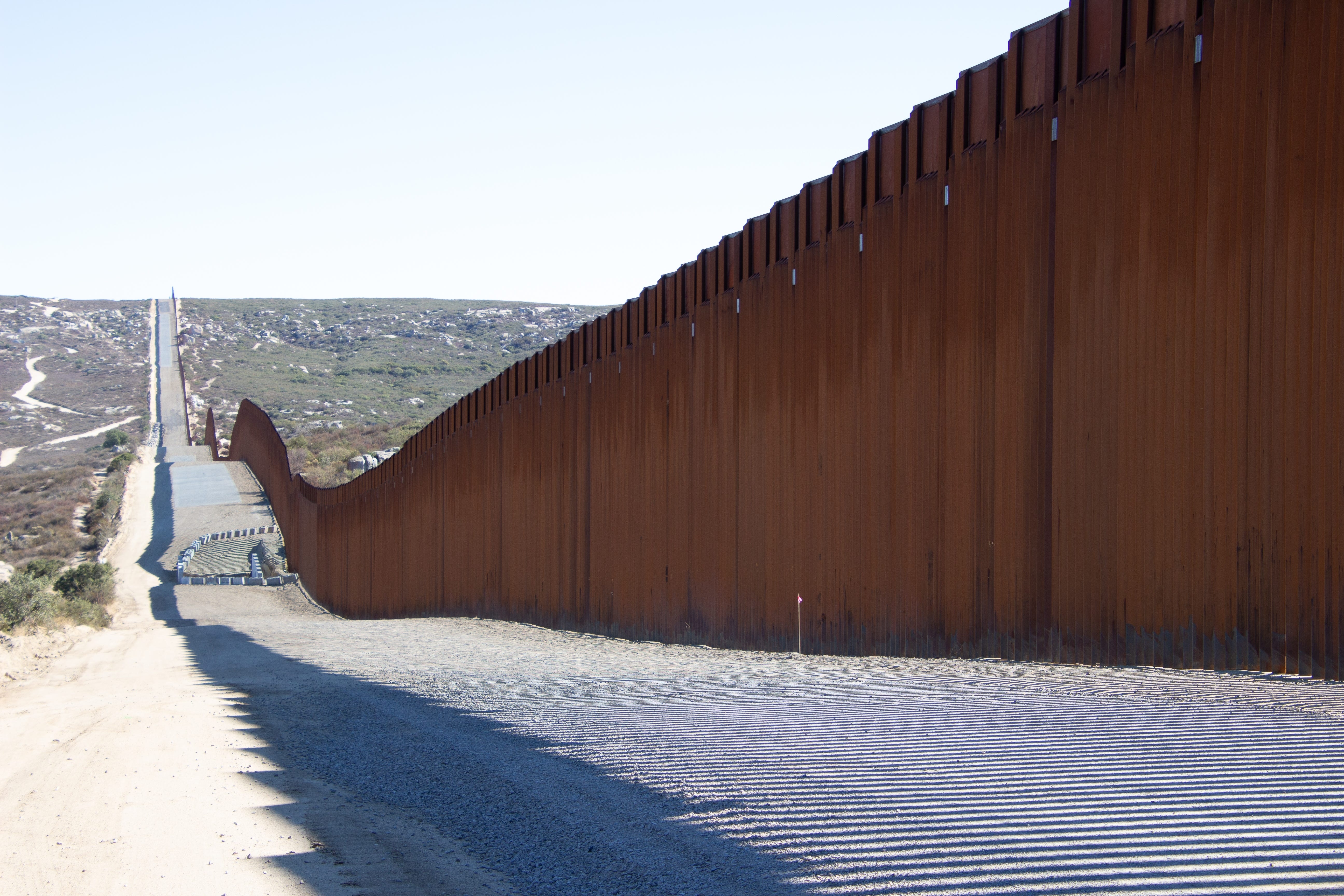
A country’s ability to secure its border must be a primary component of its national security strategy and its foreign policy. This fact seems obvious: keeping dangerous people and products from entering the country is a prerequisite to ensuring that the American public is safe. In fact, recent polling by the Searchlight Institute confirms that for many voters — including critical swing voters — border security is national security, and immigration is not solely an economic or cultural issue. But for too long, Democrats have sidestepped — and often actively ignored — border security when they advance their vision for national security.
In Searchlight’s polling, securing the border was seen as a “very important policy goal” for half of voters, including 77% of Republicans and 47% of Independents, but only 19% of Democrats. In fact, Republicans see border security and the prevention of illegal immigration as a key element of a national security policy — more important than maintaining a strong military and stopping the spread of weapons of mass destruction.
Drug trafficking was also seen as a key national security threat that deserves a strong policy response. More than half (54%) of voters, including 77% of Republicans and 44% of Independents, say it is usually or always appropriate to use military force to intercept drug traffickers. This enthusiasm among Republicans is likely related to Trump’s use of military force against boats in the Caribbean and Pacific.
The donkey in the room
It is clear from our poll that Democrats, unlike other voters, do not prioritize border security in national security or foreign policy. This kind of myopic thinking about the border is also present in America’s national security apparatus, which has historically overlooked the importance of the border by focusing almost exclusively on great power competition. You can see this clearly in how our government is structured.
In the executive branch, the Department of Defense devotes a small fraction of its resources to the Western Hemisphere even as its combatant commands deploy incredible firepower, bases, and resources in other parts of the world. And DOD has historically resisted devoting substantial resources to combatting drug or human smuggling in our hemisphere — activities that can help contribute to the security of our border — preferring instead to focus on building warfighting capacity.
The State Department’s Bureau of Western Hemisphere Affairs has also historically been viewed as a place where young diplomats cut their teeth before moving up and out to more important postings in Europe and Asia. Before President Trump’s ill-advised moves to neuter our global soft power by slashing foreign assistance, USAID spent only 10% of its budget in the Western Hemisphere.

Meanwhile, the State Department has historically been more focused on helping Europe solve its refugee crisis than helping the U.S. solve ours: its Bureau of Population, Refugees, and Migration spent more than four times as much money in the Middle East and Africa on migration than it did in the Western Hemisphere. This lack of vision isn’t just confined to the Executive Branch. The Congressional oversight and appropriations committees that authorize and fund the Departments of Defense and State have also resisted treating border security-related issues within our hemisphere as a key part of their jurisdiction.
This structural bias against prioritizing border security in our national security governance and foreign policy has had real consequences. One of the most pernicious effects has been the State Department’s lack of focus on immigration and border issues as it engages foreign governments. For example, during the Biden Administration, Panama’s decision to swiftly bus migrants who exited the Darien jungle after the brutal week-long hike from Colombia to Costa Rica turned the previously impenetrable jungle into a highway that hundreds of thousands of desperate migrants took to come north. At the same time, Venezuela refused to accept returns of their nationals for most of the Administration.
Allowing two foreign governments to effectively dictate our border policy led to a crisis on our border that continues to reverberate in our politics to this day. Our inability to wield the full power of the U.S. government to strong-arm those governments to change their policies reflects a lack of conviction within the Democratic establishment and the State Department that the security of our border needed to be a real focus of our foreign policy.
So while I disagree with most of President Trump’s callous and wantonly cruel immigration policies, I cannot help but note with some chagrin that his team has successfully made border and immigration issues central to their national security and foreign policy strategy — with real results. The State Department has concluded a series of landmark agreements with foreign governments to accept the return of third country nationals and beef up their enforcement of transit routes, which have contributed to record lows in illegal border crossings.
To be clear, some of these agreements — such as the decision to deport immigrants to jails in El Salvador or to war-torn countries in Africa — are clearly beyond the pale. But the swiftness with which the State Department was able to negotiate these agreements shows what is possible when leadership truly prioritizes the security of our border as it engages with foreign governments. The next Democratic administration should not lose focus on these issues and instead channel this energy to make smarter, safer, and more durable partnerships with our international counterparts on migration and border issues.
Likewise, the Department of Defense has taken extraordinary — and I would argue illegal — actions to target and assassinate purported drug smugglers in the Caribbean and Pacific oceans. These actions reflect a muscular role for DOD in helping to secure the border in this Administration, but they are also counterproductive. Killing alleged smugglers means that we cannot elicit information through interrogations and analysis of their devices that can be used to identify — and go after — the broader criminal networks that they are working for. We should encourage DOD to play a more active role in targeting drug smuggling in our hemisphere, but ensure that they are doing it smartly and legally.
Democrats need to stop paying lip service to the border
Democrats need to recalibrate their thinking on national security and convince voters that they are serious about securing the border. According to our poll, border security ranks 2nd among 14 possible national security policy priorities for Republicans, 4th among swing voters, and last for Democrats.
Likewise, voters spontaneously bring up immigration issues when asked open-ended questions. Voters have favorable impressions on Republicans’ strength on immigration and border issues, and list these same matters as their top concerns about Democrats. This simply must change if Democrats are to regain the broader public’s trust on this issue.
Democrats should do three things to change this narrative. First, they need to get over their allergy to talking about the need to secure the border as a key national security priority. Democrats simply cannot be credible with voters on national security issues if they believe we will return to the border crisis of the Biden years.
Second, border and immigration policy has to be a central plank of any credible foreign policy. We need countries to help us interdict drug smuggling, police transit routes, accept the return of migrants, and create more lawful pathways for migrants.
Third, border and immigration policies must be comprehensive and include commonsense measures that ensure the border remains secure, while providing orderly legal ways for people to come to the United States, help grow our economy, and make our cities and towns more prosperous. Until and unless Democrats get serious about securing the border, voters will continue to trust Republicans more on these critical issues.

I agree with everything in this article, however, I'll add a few points. We must begin any comprehensive border security program by acknowledge some things. First, immigrants—illegal or not—have since before the U.S. was a country, been a key part of our economy and have disproportionally committed fewer crimes than U.S. citizens. Second, those who come here to work do so because there is demand for their services. This demand exists because U.S. citizens do not want to do the labor for the wages offered. If we want to restrict that, then we have to offer (mostly young men) higher wages and institute some type of apprenticeships in some areas (e.g., construction). Third, if the U.S. issues work visas, then we must honor them, provide those laborers due process, and treat them fairly. Lastly, if the U.S. really wants to discourage illegal immigration, then it should prosecute those who employ illegal laborers.